Counting down (or is it up?) ’til Shavuos

This time of year is always a little interesting for me, since my one-and-so-far-only (yes, I’m still whining about that) book is seasonal, as it is set on erev Shavuos. I read my book at synagogue, have friends and acquaintances purchase it, do a school visit…that type of thing.

There aren’t many Shavuos books out there, which is one of the reasons I wrote the book. When A Dozen Daisies for Raizy finally came out (I think it holds the publisher’s record for longest stretch from manuscript sale to publication), it came out the same year as the Shavuot book in the Sammy Spider series. My first thought was “Oy!” but others told me that people about to purchase Sammy Spider (a very well-known commodity) might see my Shavuos book and then either buy mine instead or as well. I felt a little better.
Then, reviews started trickling in. Most of mine were good or at least okay–the kids, parents, teachers and librarians who’ve spoken to me have been much more enthusiastic–but there was ONE review that was SO BAD I wanted to cry. And when A Dozen Daisies for Raizy became available through Amazon, that was the review posted on the page for the book, because it was from the most prestigious source.
One of the things that was most hurtful was that the person who wrote the review compared my book unfavorably to another book, A Mountain of Blintzes.
Buy this book
This was like turning to your kid and saying, “You’re terrible, but your big sister…she’s terrific.” Right to her face.
The thing is…I really like A Mountain of Blintzes! But I almost couldn’t, because of the hurtfulness of the reviewer’s words. It’s the tragedy of saying Onaas HaDevarim (hurtful speech prohibited by the Torah). My anger at the reviewer almost carried over to anger against Barbara Diamond Goldin (author of …Blintzes) who I’m sure had NOTHING to do with the aforementioned hurtful statement.
Thankfully, I’m pretty much over this whole episode now. I’m actually sad for Barbara Diamond Goldin, because her funny, lovely book is tragically out of print. You can still find it in libraries and through online booksellers who deal in out-of-print merchandise. I urge you to borrow or purchase it during the upcoming holiday season.
And if you can borrow or buy A Dozen Daisies for Raizy, too…that’s even better.

Great Bedtime Stories beyond _Goodnight Moon_

Interrupting Chicken

I’m feeling inspired by the wonderful new book by David Ezra Stein, called The Interrupting Chicken. My children and I are going to list a few other of our favorite bedtime stories.
Bedtime for Mommy, by Amy Krouse Rosenthal. Turnabout is fair play in this uproariously funny, topsy-turvy tale.
Tell Me Something Happy Before I Go to Sleep
Tell Me Something Happy Before I Go to Sleep is a wonderful way to address children’s fears at bedtime, plus teaches a healthy way to cope with these troubles. Also, there is a touching relationship between the big brother and his little sister.
We found the adorable Sleepyhead inside our Cheerios box at breakfast one day. Very charming, very snuggly.
As anyone whose read my blog already knows, I’m slightly obsessed with books by Sandra Boynton. Here’s her silly, but soothing, bedtime classic, The Going to Bed Book.


Good Night, Gorilla

With very few words, Peggy Rathman leads children on a fabulous bedtime adventure in Goodnight Gorilla.

Artscroll publishes a whole series of wonderful, wholesome anthologies full of very short stories, just right for bedtime reading. They are widely available in Jewish bookstores and online.
Hanna's Sabbath Dress
This story is perfect for a Friday night: Hanna’s Sabbath Dress. The original Hebrew version of this book has long been a favorite of my children. Hanna is a little girl who has just received a new, white Shabbos dress from her mother. When she does an act of kindness, there are unforeseen consequences. How will she ever bring herself to face her mother?


Last, but not least: the brand new, absolutely fabulous Hashem is Truly Everywhere by Chani Altein, with pictures by the fabulous, local-to-L.A. artist, Marc Lumer!
Put in your bedtime story suggestions in the comments below.

A Light to the Nations

There have been several outstanding books in the last few years that, while by Orthodox Jews, were written for the public at large. I’ve mentioned some of them in previous posts: My Before and After Life and Seven Blessings, for example.

Matisyahu (Miller), while he’s received a lot of flak by some members of the Jewish community, has likewise brought the beauty of the Jewish worldview to a broader audience through his music.

First of all, every time someone picks up a book by Risa Miller, Yehoshua November, Rochelle Krich, or Ruchama King Feuerman, they AREN’T reading…I’ll let you fill in the blank. And every time someone listens to Matisyahu, Y-Love, DeScribe, Ta-Shma, or Moshav, they AREN’T listening to…I’m sure you can fill that blank in, too.
There’s merit just from that. So much poison fills our minds when we internalize messages from music, art, and literature filled wrong-headed thinking. Even a morally-neutral alternative is preferable
But the artists I mention above go further than this. There’s just so much beauty in these artists’ words. They fill the readers’/listeners’ hearts and touch them much better than a good mussar schmuess rarely will for the average American…and the audience will remember the message. People will remember the words to a song or poem for years and years, if not a lifetime.
This is the kind of art I’d like to be able to share with the world at some point. An ambitious goal, for sure, but I’m hoping I’ve got years ahead of me to pursue it.
Since Lag B’omer just is past, I’m listing some links for contemporary Jewish music that penetrates the soul.
And here’s a lovely rendition of Matisyahu’s “One Day” by public schoolchildren in NYC:

Fantastic AJL conference!

The topic of the 2011 Association of Jewish Libraries conference (think I got the name wrong on a previous post) this past weekend was Graphic Literature. I’m still buzzing with excitement about the conference, so I’ll share some highlights.

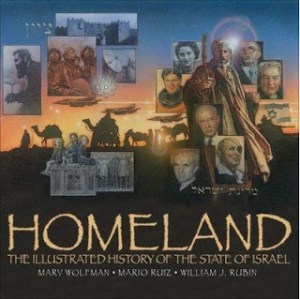
The wonderful presenters included Sid Jacobson (author of the recent and much-lauded official graphic biography of Anne Frank), William Rubin (co-creator of Homeland: the Illustrated History of the State of Israel), and Barry Deutsch, who just won the Sydney Taylor Award for Hereville.
Each one described their recent work, its development, public reaction, and future projects. Mssrs. Jacobson, Rubin, and Deutsch were all charming and engaging and totally worth seeing (and buying their books!). BUT the most amazing speaker of the conference was Anastasia Betts.

Mrs. Betts is currently a consultant and curriculum developer. She presented research on literacy and graphic literature (including comics, graphic novels, manga, etc.).
Some mindblowing facts:
The highest literacy rates in the world are in Finland and Japan (99%). They are also the biggest consumers of graphic literature.
Graphic literature is more than just comics, but can come in every genre, for any audience. The text, particularly unfamiliar vocabulary and main ideas, are supported by pictures for weaker readers. Visual learners have more cues than in traditional text. Eyes move differently over the pages.
If you introduce graphic literature into a school library, use of the library by students will increase by more than 80 percent, with 32 percent of the increase in borrowing being the non-graphic literature!
We’ve already seen graphic formats being adopted by Jewish publishers (see authors above). You can even argue that he fabulous Katz Hagaddah with illustrations by Gadi Pollock that many of us use on Pesach is an example of this phenomenon. Think of how readers react to it, or to the graphic 39 Melachos of Shabbos book, or to Trekking Through Time, or The Search for Stones (illustrated by the wonderful L.A.-local Marc Lumer). I’ve seen kids and even adults ooh and ahh over them. I’m hoping that this will be a trend that continues.

“Out of Town:” 1 sure-fire way to drive Jewish Angelenos crazy

I’ve long found myself annoyed with the expression that if an American Jew resides in New York, they live “in town,” but if they reside outside of New York (or maybe New Jersey), they live “out of town.” This is true even if they live in Chicago, Cleveland, or Baltimore–all of which have influential yeshivos–or if like me they live in L.A., home of the second-biggest Jewish population in the country.

It’s enough to make you want to scream. Even secular Jews are not immune to it…think of the stereotypical American Jew straight out of an episode of Seinfeld or a Woody Allen movie.
As a result of this lop-sidedness, I have tried to compensate. Any piece of fiction I’ve written that has a clear setting has taken place in either L.A. or Baltimore (my hometown)…unless it’s on another planet, which has happened twice, so far.
My eldest son, Aryeh always gets very excited reading about HIS hometown, and when I write a story set in L.A., he lets me know he approves loud and clear. Unfortunately, his disapproval can be just as vociferous. You see, my attitude has rubbed off on my son. Yesterday, he told me that he hated the library book I’d so carefully selected just for him. Why? “Because the author lives in Los Angeles, but he sets the story in New York.”
Lucky for us, he plans on being a writer (and rocket scientist, and automotive engineer, and world traveler….) himself. Expect lots of stories from him in about 15 years. They’ll all be set in L.A.

Contemporary Jewish Books for Kids

BS”D


I just read this article by about a Jewish writer (Laurel Snyder) who doesn’t write for Jewish kids.


http://www.tabletmag.com/life-and-religion/1041/where-the-wild-things-arent/


She subsequently published the book Baxter the Kosher Pig. (The publishing of this book was received with drama in our house a few months ago not because of the subject, but because my husband and I had written a similar book and failed to sell it to a publisher. I think it was a Test in taking pleasure in other people’s accomplishments,fargenign” in Yiddish…and I’m ashamed to say I flunked.)

Snyder feels that Jewish books today are too tame and tend towards the “instructional”, as she calls it. She’s not alone. On the other hand, my kids seem to like the Jewish books they read even if they have instructional motives. Personally, I like a lot of them. However, I’d definitely like to see more variety and innovation in Jewish children’s fiction choices.

Historically, the Jewish people have always enjoyed midrashim (instructional stories from the Oral Torah traditions) and mashalim (fables). In fact, these books seem to sell most. Jewish publishers have told me that when the marketing department runs their numbers, it’s the “teaching” books, books with conservative watercolor illustrations, books that are familiar in tone and style that sell. Publishers have to deal with the realities of the pocketbook, too, you know.

Additionally, each Jewish publisher serves a niche market. Your “atypical” manuscript can easily be bounced around with compliments followed by comments like: “Too Jewish”, “not enough Jewish content”, “could offend some readers”, “not edgy enough” without ever finding the “just right” fit. (See this link for more on the subject.


A few publishers put out books that are edgy–but only in that they address issues very modern or even outside frumkeit. They are often AT LEAST as pedantic as the traditional books and stylistically quite similar. They just try to nudge readers towards a “Reform” mindset vs. an “Orthodox” one, for lack of better terminology.

It doesn’t help that picture books are extremely expensive to print, yet sell less than adult books. Publishers are afraid to gamble in such a situation.

Additionally, there are few incentives for a writer to focus on the Jewish children’s market. You have a smaller audience, smaller paycheck, etc. Many talented writers throw their hands in the air and walk away, or they submit instead to periodicals, which buy in greater volume (they have to fill their pages weekly) and are a little more flexible in what they are willing to publish.

Any opinions out there?