Throwing down the gauntlet: I challenge you to write something different!

knight in armor

Be careful! If this guy throws down the gauntlet, it’ll probably hurt.

So yesterday I read this post by the Rubber Ducky Copywriter. In it, she posts about her first rejection letter after going out on a limb and submitting a short story. Despite her success as a copywriter, fiction is a new endeavor for her, and rejection hurt.

First of all, I’d like to cheer her on. Despite the rejection letter (and my readers will know I’m no stranger to them), the Rubber Ducky Copywriter did something a lot of us writers don’t do: try something new.

A lot of us avoid writing new things, especially after we find success (especially financial) in a particular niche. I know that it took me a long time to start writing for adults after I’d succeeded with kids’ lit. Other changes were also scary, because they carry risk. What if you invest time and emotions and no one ever publishes it?

But the pay-off can be big.

For years, I focused on my fiction. When I ventured on occasion to write a personal essay, it would inevitably face a quick rejection. Out of frustration, I gave up writing personal essays for a long time.

But, when I came back to it, I did better. My years of practicing fiction helped me hone my storytelling abilities. The first personal essay I’ve had published shows this and found a much wider audience than my fiction thus far has.

So here’s my creative writing challenge:
Continue reading
Lights to the Nations: Two Jewish thinkers release their books for the secular–even non-Jewish–audience

Wow.

That’s pretty much all I could say. I read an amazing blog post by Ann Koffsky this morning (thanks Ann for sending me the link!) where she interviews the unforgettable writer Gila Manolson. The interview is chock full of advice to writers, advice to parents, and other neat stuff. But the biggest revelation to me is that Manolson has created a website to promote her upcoming book–her first book for a non-Jewish audience.

Manolson is not alone. Continue reading

When good things happen to anxious people: the beginning of a new project

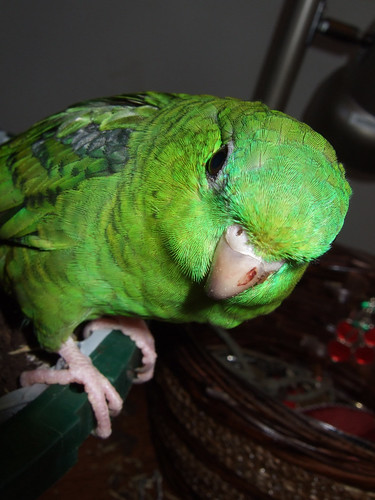
parakeet, lineated

I hope I say something original, for once.

I’m close to wrapping a piece for a magazine, and I’m waiting on the opinions of some of the beta readers of one of my WIPs, so Friday morning, I started rummaging though my old journals for some new-old project ideas. Among my scribbling, I found notes about a folktale that really appealed to me. A little research has indicated that there is only one picture book retelling of this story. Which is why, for the first time, I’m attempting a folktale retelling.

Good for me, right? It’s good to try something new, right? Continue reading

How can you offer someone advice without taking it yourself?

I was corresponding with a client last night who is–among other things–considering publishing an ebook to distribute among clients and potential clients. I was telling her I thought it was a great idea, how it can be done with relatively little expense, yadda yadda yadda.

And then I thought to myself, “Hey! Why don’t you take your own advice?”

Not only might it generate business, but it’ll give me experience using the tools available on CreateSpace (or Lulu, or whichever service I go with) that will prove useful if I help last night’s client (and hopefully future ones) with their projects. I spent an hour and a half last night clipping bits from emails and blog posts to consolidate into a short ebook. It’ll take a few more hours just to complete the writing and editing of the material, and I’m sure it’ll take a while to design the ebook. But I’m excited about this little side project.

So the next time you offer someone some brilliant advice…prepare to take it yourself!

The 2 easiest ways to write books yet

 Snowflakes

Picture credit:
http://etc.usf.edu/clipart/24300/24305/snowflakes_24305.htm

For a while now, I’ve been a believer in the Snowflake Method. It was invented by Randy Ingermanson as a way to build your novel in a structured, yet streamlined way, and it does just that. I came late to it, as my novel had started off as a short story, then had expanded to much more than that. I wish I’d got to the Snowflake Method sooner–it would have prevented me from floundering about quite as much. There are other ways to create a novel with discipline and skill–but this has always seemed to me just about the easiest. There’s even a computer program that can help you with the method.

However, there’s new tool that makes creating a book possibly even easier. Building on a successful blogging format, the folks at PressBooks have designed a online tool that adapts the WordPress platform for the purpose of making a book. The writing process becomes as easy as managing a blog, using the same familiar, simple tools.

The webware is free, and can be used collaboratively (multiple authors can have access to your book-in-progress at once, just as with a blog). Each post is roughly one chapter. You can take your document and covert it to a PDF, epub, etc. It can also be used for a POD (Print On Demand) service, if that’s what you want to do. The design of the book is reportedly much more refined than in most do-it-yourself POD products.

I’m skeptical about its utility for novel-writing (although if you want your final product to seem like a fly-by-the seat-of-your-pant serial, where what happens next might surprise the author as much as the reader, it might be okay). It’s too linear, where a good novel is usually built in layers. However, if you are working on a non-fiction book project with colleagues, I imagine it would be outstanding. Check more about it out at: http://pressbooks.com/about