Play-by-play: The Weird Things that Happen When You Write Under Time Pressure

clock

Tick-tock…Quick, that deadline’s approaching!

Foolish me.

So, as I mentioned last week, I committed to produce a story just three days after Passover was over. I did prewrite before the holiday, and even had started a first draft in longhand (I often do). It was this surprisingly dark piece, written in second-person. A concerned family member was talking to “you,” and “you” (it becomes clear) are suffering from a clinical depression.

When I picked these materials back up after Passover had wrapped up,  the first thing I thought was: ugh.

  1. The tone was too dark, especially for this particular venue (Ironically, the theme I was given was “Put some spring in your step!” Right.).
  2. The second-person thing effectively pulled you in–making the dark subject matter even more depressing.

I felt like hyperventilating. Was I back to square one? With only three days to go?

AHHH!

Continue reading

3 Tricks for magazine writers: How to write on a theme and still make your deadline

keyboard

Before you start to type, you might want to try one of these 3 things.

One of my writing jobs is penning teen and tween stories for Jewish magazines. Before getting this gig, I had to learn an important lesson: most kids’ magazines select one theme per issue, and they are only open to stories on those themes. That means you have to write what they want, when they want it–but you’ve got to still tap into your creativity to make your story fresh, fun, and readable.

NOTE: Writing contests (although many are scams, there are plenty of legit ones) and classroom assignments frequently require that submissions/assignments include a specific topic or theme and have a deadline, as well. You don’t have to write for magazines to benefit from these 3 tips.

Sometimes, I get the heads-up on what story the editor wants on what theme a month in advance. But sometimes it’s a lot less. How do I come up with a story on short notice?  Continue reading

But what about my Voice!?! What a writer should do when an editor asks for “a few changes.”

parakeet

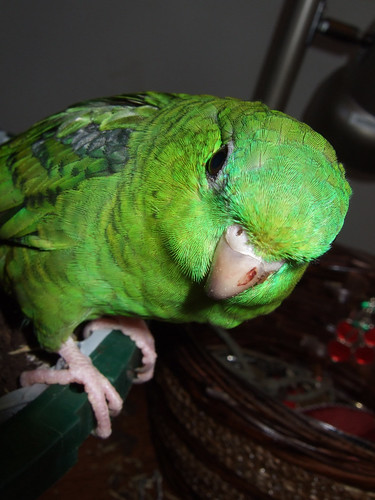
Hey, buddy! What about my voice?

Last week, I got an email from an editor (she’ll be the heroine of this story, but will remain nameless nonetheless). She asked me to make one change–one very small change–to the story that I had submitted.

Because I trust this editor–she’s very good at what she does and has built a friendly relationship with me–I said I’d make the teeny-tiny change she’d requested.

And then I panicked.  Continue reading

A picture is worth a thousand words: what photojournalists don’t want you to know about their images

Two recent articles are worth a peek for what the reveal both about contemporary politics and about the nature of photography itself.

The pieces–one in the Washington Post, the other on Breitbart.com–describe misleading pictures published during the recent Gaza conflict. Most notably, photos of dead and maimed children were used by pro-Palestinian journalists in order to accuse the Israelis of being brutal assassins of the young. Whether you feel Israel’s actions were justified or not, Palestinian children were hurt and killed during battle (and so were Israeli children). However, further investigation revealed that one of the photos–said to portray a Palestinian child gravely wounded by Israelis–was in fact a child attacked by Syrian forces in the conflict in that country. And another child, supposedly killed by Israelis, was most likely killed by a Palestinian rocket that misfired. These are only two among many “photo-ops” that were intentionally mislabeled for political purposes.

ink bottle

If I spill some ink from this bottle, what will you see?

Of course, as the Washington Post article points out, the misrepresentation isn’t always by the pro-Palestinian side (although usually Israeli press just doesn’t publish images of Palestinians who are hurt or injured). And I don’t really want to get into the political aspects of this case. What I would like to do is point out how this issue goes far beyond the Israeli-Palestinian conflict. Continue reading