When good things happen to anxious people: the beginning of a new project

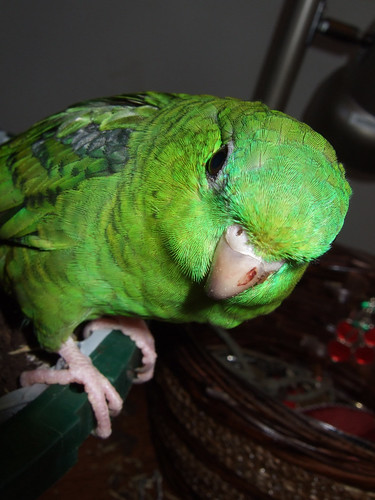
parakeet, lineated

I hope I say something original, for once.

I’m close to wrapping a piece for a magazine, and I’m waiting on the opinions of some of the beta readers of one of my WIPs, so Friday morning, I started rummaging though my old journals for some new-old project ideas. Among my scribbling, I found notes about a folktale that really appealed to me. A little research has indicated that there is only one picture book retelling of this story. Which is why, for the first time, I’m attempting a folktale retelling.

Good for me, right? It’s good to try something new, right? Continue reading

Library Love – Bibliophiles and the places they frequent

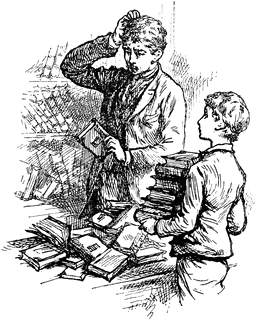
father and son in the library

Hey, kiddo! Do you really need this one, to? Good thing I don’t have to pay for all of these.

When I was a teenager, I lived across the street from the library. I did homework there, typed most of my college applications on their noisy electric typewriter (10 cents for each 15 minutes, I think), and perused the shelves for hours on end. I’d already developed a taste for books by that age, but there’s no doubt in my mind that my family’s proximity to the library solidified my attachment to books, reading, and libraries, in general.

Now that I’m older, I live in a family fully of bibliophiles. We read to learn Torah. We read for entertainment; we read to learn how to do new things; we read for school assignments. We read because otherwise we’d go into withdrawal and start twitching in a dark room. Continue reading

Tragedy! My lonely old maid of a story has been rejected once again.

I’m sure I’ve blogged about rejection numerous times at this point, but since I continue to collect rejection letters, why not continue blogging about them?

boy with letter

Mom! I think you just got another rejection letter!

Over the summer, I wrote a story that my husband adored. He likes almost all my stories, but this one he really, really liked. He particularly enjoyed the nasty anti-hero at the center of the story and the unhappy ending.

On the other hand, I didn’t like the way I’d originally executed my idea, so I set it aside for a couple months. Eventually, I brushed it off and polished it up a bit before sharing it with my writing group. They provided extensive feedback, and I acted on it, hoping that the new, much improved story would dazzle the editors. Continue reading

10 Ways to show your favorite authors just how much you love them

Pretend you’ve just opened up your favorite magazine. You see a name–the name of your favorite writer, whose articles you always like. You flip right to the page with their latest story and start to read.

Or maybe there’s an author you like so much that you head for the book shop as soon as their newest title comes out. Or perhaps your librarian knows they are your favorite writer and steers you to all their books.

Or maybe there’s a book you always recommend to friends, but no one’s ever heard of that author or that book before.

How do you love me (and my blog), let me count the ways…

I’ve been doing research about marketing and SEO (search engine optimization) in the last few weeks, and what’s interesting is that for writers, many of the best ways to promote our work are free—but depend on the participation of our fans to succeed.

How can you help writers like the ones I described above improve their sales and market visibility?

Here are a few steps. Continue reading

How to teach people while you entertain them: Modern-day Moshels

To those unfamiliar with the term, a “moshel” is the Hebrew term for a parable, a story told with the intent to illustrate a lesson (usually a moral or theological one). I equate moshels with the soda your mom would offer you as a chaser after taking whatever foul-tasting medicine the doctor had prescribed you. It makes it easier to get the lesson down, and you might even look forward to the next dose.

Moshels–particularly those of the Baal Shem Tov, Rebbe Nachman of Breslov, and the Ben Ish Chai–are familiar to most readers with a Jewish education. They often appear in Rabbis’ drashos, and they sometimes make their way into children’s books. Several authors have recently attempted to update classic moshels and make them more appealing to tweens and teens–most successfully, perhaps, Steve Sheinkin in his entertaining Rabbi Harvey series, which take place in the Old West. One of the most challenging aspects of this genre is that you want to convey the lesson accurately without sounding pedantic, boring, or preachy. Also, some of the settings and situations detailed in traditional moshels don’t appeal to contemporary readers, or (more often) are so unfamiliar as to complicate comprehension of them.

I have my own spin on the Modern-day Moshel that I’ve been trying to market, which I’m not sharing here (because, like many authors, I’m terrified of people copying my idea before I can sell it myself–see this post). However, I thought I’d provide a heads-up to my readers what I’m thinking about right now.