Different strokes for different folks: How one book can inspire so many others

A while back, someone my husband respects very much encouraged him to read this book:

Stop Surviving Start Living Shafier

Rabbi Shafier’s book, based largely on Mesillas Yesharim

The first time I read Rabbi Shafier’s book, Stop Surviving, Start Living, I just didn’t get it. Not the content of the book — the content was clear as day, written lucidly by Rabbi Shafier, with nice anecdotes and everything. What I didn’t get was that it was based on a book my husband had already read. This one: Mesillas Yesharim, known in English as The Path of the Just, one of the most foundational texts in the Mussar world.

Mesillas Yesharim by the RAMCHAL

The original. So inspirational…and a bit scary for the uninitiated.

Why, I asked my husband, write a book based on another one, a book that you actually want people to read (because you’re such a fan yourself)? Continue reading

New Jewish year, new books by Jewish authors!

The new Jewish year is marked this time around with several new book releases that have me very excited:

1) After being mesmerized by The World to Come and In the Image, I can’t wait to read Dara Horn’s newest, A Guide for the Perplexed, which was officially published today. An essay by the author appeared in The New York Times this week, reminding of the book’s release. The topic was the role of memory in literature — particularly in Jewish literature — which Horn tied to Rosh Hashanah. (The holiday falls later this week, and it’s also known as “The Day of Remembrance.”) Her new novel reportedly draws on this theme as it follows two contemporary characters obsessed with the work of the Rambam.

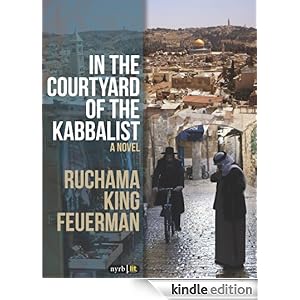
in the courtyard of the kabbalist

Ruchama King Feuerman’s latest, just out

2) Ruchama King Feuerman’s In the Courtyard of the Kabbalist follows an assortment of characters in Jerusalem. I’m very blessed that the author has sent me an advance copy — a review here on the blog will be forthcoming. I was a big fan of her last book, Seven Blessings, as well as some of her more recent, shorter work. Feuerman has been called “a Jewish Jane Austen,” probably because her character portraits so marvelously balance positive and negative qualities. I’m already a few dozen pages in to the new book and really getting into it. For a recent review, see here.

3) Ofir Touche Gafla’s The World of the End will soon be published in English. Continue reading

My 5 Favorite Things Currently on the Web

I spend most of my time on the internet doing work, but every once in a while, I stumble upon something I love and have to keep coming back for more. Here are links to my current favs so you can check them out and get obsessed, too.

1) Space Rabbi – I love the brothers Taub and have enjoyed their various projects on Chabad.org for years. Episode 1 gets off to a slow start, but it’s all wackiness from then on, from the retro “futuristic” design elements, to the HAL references, to the bizarre characterizations of all the electronic gadgets that come to life and interact with Rabbi Blastoffski.

Yes, the main character is actually called Rabbi Blastoffski. How cool is that?

2) Pop Chassid – Currently, my favorite Jewish blog on the internet. Elad Nehorai reflects on Judaism, Chassidus, the arts, and modern life. Not only are his posts insightful, but he has some wonderful followers who post great comments.

3) Hanan Harchol – I first got wind of this guy through a bit he had up on Aish.com.  Most of the videos are animated dialogues between Hanan and (his impersonation of) his father and contain reflections about Jewish philosophy. Utterly charming and thought-provoking.

4) Verplanck – I’m not sure how long these guys are going to be around, because they need to raise funds for their project, but part 6 of their Orthodox online comedy is simply hilarious. (Although you probably need to be religious to get the jokes.) It’s awesome if you’re home sick and are too old for Agent Emes. You will laugh yourself healthy.

5) Shtar – Because they rock. Literally. (Okay, sometimes it’s more like hip-hop. Or maybe techno. Or maybe just cool.) “Wonderland” should be used in commercials by the Ministry of Tourism to encourage travel to Israel.

(My first runner-up is G-dcast, video interpretations of Jewish texts that aren’t always Orthodox, but always creative. Check out Avoiding the Mud for a Chassidishe meise, or The Rise of Yavneh for the story of Kamsa and Bar Kamsa and destruction of the Temple.)


How to write funny: what you can learn from Isaac Asimov

Asimov on Humor

A must-read for anyone who wants to write humor

When I first married my husband, I was delighted to discover among his possessions a copy of Isaac Asimov’s Treasury of Humor. I had read the book in high school and enjoyed reading it again, this time discussing it extensively with my husband.

Not only does this book contain jokes–great, classic ones–but Asimov explains why they’re funny, how to tell them, the origin of them, and if there are different versions. He explains the differences between shaggy dog stories, puns, black/gallows humor, and so on, and what makes each type tick. Asimov does this all in a chatty way that reminds you of your great-uncle shmoozing with you–it’s just so much fun.

Flash forward a few years. Continue reading