Who’s talking? POV, Voice, and Narrator as explained in Anne Lamott’s Bird by Bird

book cover

Bird by Bird by Anne Lamott

There are few books that come up with my writer friends more often than Anne Lamott’s Bird by Bird. In the same way that I feel like I’m not quite smart enough because I’ve never taken Calculus, I’ve felt like a slacker because I never got around to reading it.

And I should have felt guilty–because it’s great.

Okay, so it has a lot of rather vulgar language, but Lamott’s writing is so funny, and yet so useful, that I’m pretty much in love with the book.

One of the interesting bits of advice that Lamott gives writers is a gem she attributes to the author Ethan Canin. The most important way to improve your writing, he says, is to employ a likeable narrator.

Here’s the thing that struck me about this advice: for many, many years, I always wrote in third person. Continue reading
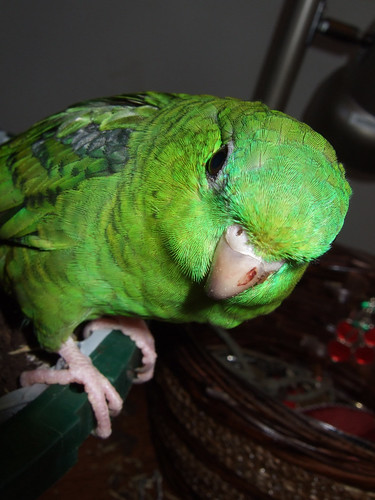
But what about my Voice!?! What a writer should do when an editor asks for “a few changes.”

parakeet

Hey, buddy! What about my voice?

Last week, I got an email from an editor (she’ll be the heroine of this story, but will remain nameless nonetheless). She asked me to make one change–one very small change–to the story that I had submitted.

Because I trust this editor–she’s very good at what she does and has built a friendly relationship with me–I said I’d make the teeny-tiny change she’d requested.

And then I panicked.  Continue reading

Patience is a virtue–Submit when it’s perfect, and then prepare to wait

As I mentioned in a previous post, I’ve been picking up the pace of my submissions, and also broadening the variety of publishers I’ve been submitting to. What I didn’t realize when I committed to this strategy is how much this would test my patience.

waiting - image courtesy of microsoft

You might as well take a seat…this is going to take a while.

Let me explain. Usually, I write for Jewish magazines. If I submit a book, it’s usually a picture book involving Jewish subject matter. The world of Jewish publishers is very small, and the editors receive fewer submissions than those who handle secular material. The response time in the Jewish publishing world is much faster than in the secular publishing world. Moreover, some of the editors have gotten to know me over the years because they’ve employed me, read me online, or just like my style. I suspect that my subs don’t always go in the slush pile, at least in certain offices, B”H & bli ayin hara. Yes, I have to wait for a response from editors, but the wait is relatively short.

Re-entering the realm of secular publishing is a wake-up call to the realities of that world. Continue reading

Some clear ideas from the author of Cloud Atlas, David Mitchell

Wednesday’s L.A. Times online contains an intriguing interview with David Mitchell, the author of the novel Cloud Atlas, which has recently received renewed attention due to its film adaptation. Mr. Mitchell’s comments are worth reading, as they illuminate some of the points I’ve been blogging about recently.
On the topic of inspiration (see my original post here), Mitchell says:

I think Mr. Mitchell just blew some of those clouds away. It looks like smooth sailing ahead!

When I go to a place I get a number of free gifts. I get some good lines about the environment. If I was here for long enough, and could have a little time to walk around more thoughtfully, I’ll get five decent sentences. Or halfway decent sentences, or sentences I can make worthwhile. About the place; they’re textual photographs. I’m just in the habit of taking them. Maybe because it was a long time before I had a camera.

Do you jot them down?

Yeah. It gives you something to do in restaurants and not look like a sad sack. And also makes the staff nervous that you’re a reviewer, so they’re nice. You should try it, it works! If you get these free gifts, use them in the text, use them in the prose, use them in descriptions. Put them in and they’re lovely little things to find on the forest footpath of the story, of the book. 

What’s interesting about the process that David Mitchell so clearly describes is that its both what I’ve previously called “the flash” of inspiration AND “foraging” for it. Continue reading

How can you offer someone advice without taking it yourself?

I was corresponding with a client last night who is–among other things–considering publishing an ebook to distribute among clients and potential clients. I was telling her I thought it was a great idea, how it can be done with relatively little expense, yadda yadda yadda.

And then I thought to myself, “Hey! Why don’t you take your own advice?”

Not only might it generate business, but it’ll give me experience using the tools available on CreateSpace (or Lulu, or whichever service I go with) that will prove useful if I help last night’s client (and hopefully future ones) with their projects. I spent an hour and a half last night clipping bits from emails and blog posts to consolidate into a short ebook. It’ll take a few more hours just to complete the writing and editing of the material, and I’m sure it’ll take a while to design the ebook. But I’m excited about this little side project.

So the next time you offer someone some brilliant advice…prepare to take it yourself!