For writers: 5 ways to be funny

Stripped Hyena

If you play your cards right, you’ll have them laughing like hyenas!

It’s been a week and a half since Purim, so I’ve gotten lots of feedback about this year’s Klempner family Purim Spiel. My husband and sister (fellow contributors) agreed with me that this year’s was less funny than last year’s, but we seem to be in a minority. As I mentioned last year, since I began writing professionally, my little hobby now feels like work, and I avoided cranking out a complete rough draft until the week before Purim.

And then, I deleted several stories at almost the last minute. They just weren’t funny enough. So, I prayed–yes, that’s what this professional writer with a Master’s Degree and a generally pragmatic outlook on life did–I prayed for new ideas. And G-d sent some!

Besides relying on Heavenly Intervention, there are other ways to be funny. Without further ado:

5 Ways To Be Funny Continue reading
Better Writing vs Better Sales: What makes a better writer?

Today’s post from The Write Practice got me thinking. In it, Joe Bunting suggests that we worry too much about sales, and even about how good our writing is.

I love these two lines:

Does the fact that more people have read Twilight than have read [any book by] Mark Twain mean Stephenie Meyer is a better writer?

More important for us, does the fact that we are all less known than E.L. James (as far as I know) mean our stories aren’t as good?

metal chain

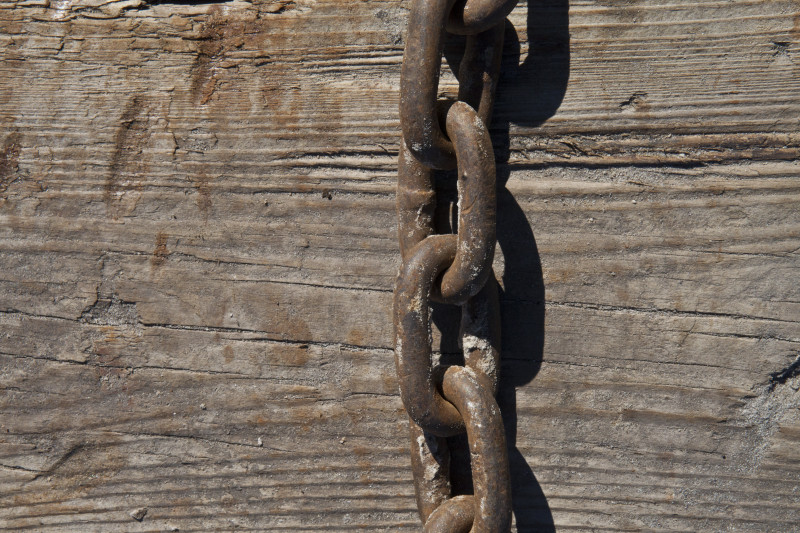
Your writing can be the chain that binds people together.

Bunting suggests we think “Connection” (with readers) over “Competition” (with other writers).

What Bunting says really appealed to me. Of all the kinds of feedback I get from my stories and articles, the ones that mean the most are the ones where people tell me that they identified with some aspect of what I’d written–particularly if the person is really different from me. This the kind of thing that bonds together humanity. Bunting would call this kind of connection literary success.

I’d call it something else: a measuring stick to use if you want to judge your writing’s moral quotient: will this writing bind people together, or will it tear them apart with strife? In that sense, “Good Writing” has a quality beyond the writer’s style or storytelling ability. It’s “Good” in the moral sense, as well.

What do you think?

Fans, friends, and trolls–publishing my first piece on Tablet

So, Tablet published a piece of mine this week. It’s been a crazy experience.

In the first place, writing the piece was a bit out of my comfort zone. While I usually write fiction, this is a personal essay. In brief, the story is about confronting my inner teenager as I’m approaching 40 and relates an episode where I thought a younger man was checking me out in a cafe.

Troll

Trolls don’t only live under bridges.

The subject matter was outside the editorial policies of the chareidi magazines that comprise my usual stomping grounds, so I had to find an alternative publisher. Afraid I might embarrass my husband, I almost decided not to publish it at all, but he assured me that he didn’t mind. And when I shared an early draft with writing friends, the strongly positive reaction encouraged me further.

Tablet accepted my query, then the completed essay. They had it up in a matter of days. Whoa. It didn’t leave me much time to prepare myself. And, boy, did I have to prepare myself.

You see, there’s a lot of differences between a Jewish, but broad-spectrum, online magazine like Tablet and print magazines in the chareidi world. The biggest difference is the comments section.

In a print magazine, there is no comments section. Continue reading

The Writing for Pay-Writing for Blog Balance

Lately, I’ve been neglecting my blog. I’m not being delinquent; I’m just being practical. Thank G-d, I’ve been doing a lot of writing in the last couple weeks, writing that is both fun and paying (my favorite combination). G-d willing, I’ll be publishing a short 5-part serial in Binyan in the next few weeks, as well as a few other exciting projects that have been time-consuming.

It’s true that blogging is not independent of my work–I maintain my site largely to create an audience for my writing, promote it when published, and help others overcome some of the professional hurdles I’ve come across (sometimes stumbling along the way). However, writing a decent post that I don’t mind having my name attached to takes time. Lately, for good reasons, I’ve felt my time has to be spent elsewhere. But posting regularly is key to maintaining a good blog.

How do the readers out there strike the right balance between blogging and other professional activities?

Coming clean: sometimes you’re supposed to do housework instead of writing

G-d wanted me to do the dishes this morning.

I finished a large-ish writing project yesterday, then pulled open another document to begin the next assignment. I got the first paragraph written, and then every ounce of creativity in my brain dried up. Okay, I had a couple ideas, but they weren’t RIPE. More like literary fetal tissue than the next baby ready to be birthed.

Those who know me or who regularly read my blog know that I rarely get writer’s block. I usually have more ideas in my mind than really is good for me. Sometimes I can’t sleep at night, because my mind is so busy that the ideas are dripping out my ears.

kitchen photo

See this immaculate kitchen? Clearly not mine.

I spent the rest of yesterday taking care of my kids, feeding them and hubby (not to mention myself), and finishing Bird by Bird. (More on that later this week.) Then I had a Tiferes meeting, but before I left, I checked my email. A girlfriend would be dropping by Tuesday morning.

Oh, no.

You see, my back had been out, and then there had been Shabbos, and then I was writing on a “finish ASAP–please!” type deadline. Result–my house was a wreck. Continue reading

2 Major differences between writing a picture book and writing short stories

So the folktale project turned out to be an eye-opening experience for me.

scissors

Am I a writer, or a barber?

When I first started writing for kids, I didn’t really understand the difference between short stories and picture books. I’d submit short stories to book publishers, and picture books to magazines who published short stories. Selling Raizy and being guided through revisions by Devorah Leah Rosenfeld, the editor at Hachai, schooled me in the differences between the two media. After a couple years, I started writing regularly for children’s magazines, and her lessons allowed me to jump between the two formats.

2 Major differences between picture books and short stories:


1) The length differs significantly in the two formats. Oddly, an entire picture book has about half the words (sometimes less) as a short story for a kids’ magazine.

2) The illustrations in a picture book replace almost all the description. And the only words that could appear in a picture book text are ones that drive the narrative forward. When I learned this lesson, my picture book writing attained a sharpness that it had previously lacked.

Continue reading