Writers wondering what goes on in the minds of other writers

A couple weeks back, Kristen M. Ploetz posted several questions she wished she could have answered by other writers. The post has generated a bit of buzz, with replies by two bloggers I admire, Nina Badzin and Rivki Silver (which is where I first heard of it).

(And then Rivki made me cry happy tears by saying she admired my work. I love her site, so the feeling is mutual.)

I found both the original post and the follow-ups fascinating. A lot of what all three bloggers had to say was about self-identification as a writer. At what point does a person who writes become a “writer?” Another theme was how the writer — whose job is by nature often solitary — interacts with their social milieu, both in their personal lives and in their professional ones.

Here are the original questions in bold. I’ll add my responses below each of them.

1. Do you share your work with your partner or spouse? Does it matter if it’s been published yet? Continue reading
A discovery! And what happens when you follow other writers’ advice.

So, things today went better today than last week. In short, I wrote more today than I wrote in the entirety of last week. (Yes, that’s how bad things were going.)

One of the things I found helpful was focus@will’s new setting “Cafe focus Beta.” A few months back, I reported that researchers released data indicating that writers are more productive in cafes than sitting in a quiet office at home. Well, I guess the folks at focus@will read the same study, because not only can you use the site to enhance your creativity with baroque or ambient music — or to white noise — you can now listen to a re-creation of a busy cafe full of people.

And yes, I did indeed find it helpful.

I also relied on the advice of other writers today in order to increase my productivity. Continue reading

Interview with Suri Rosen, author of Playing with Matches

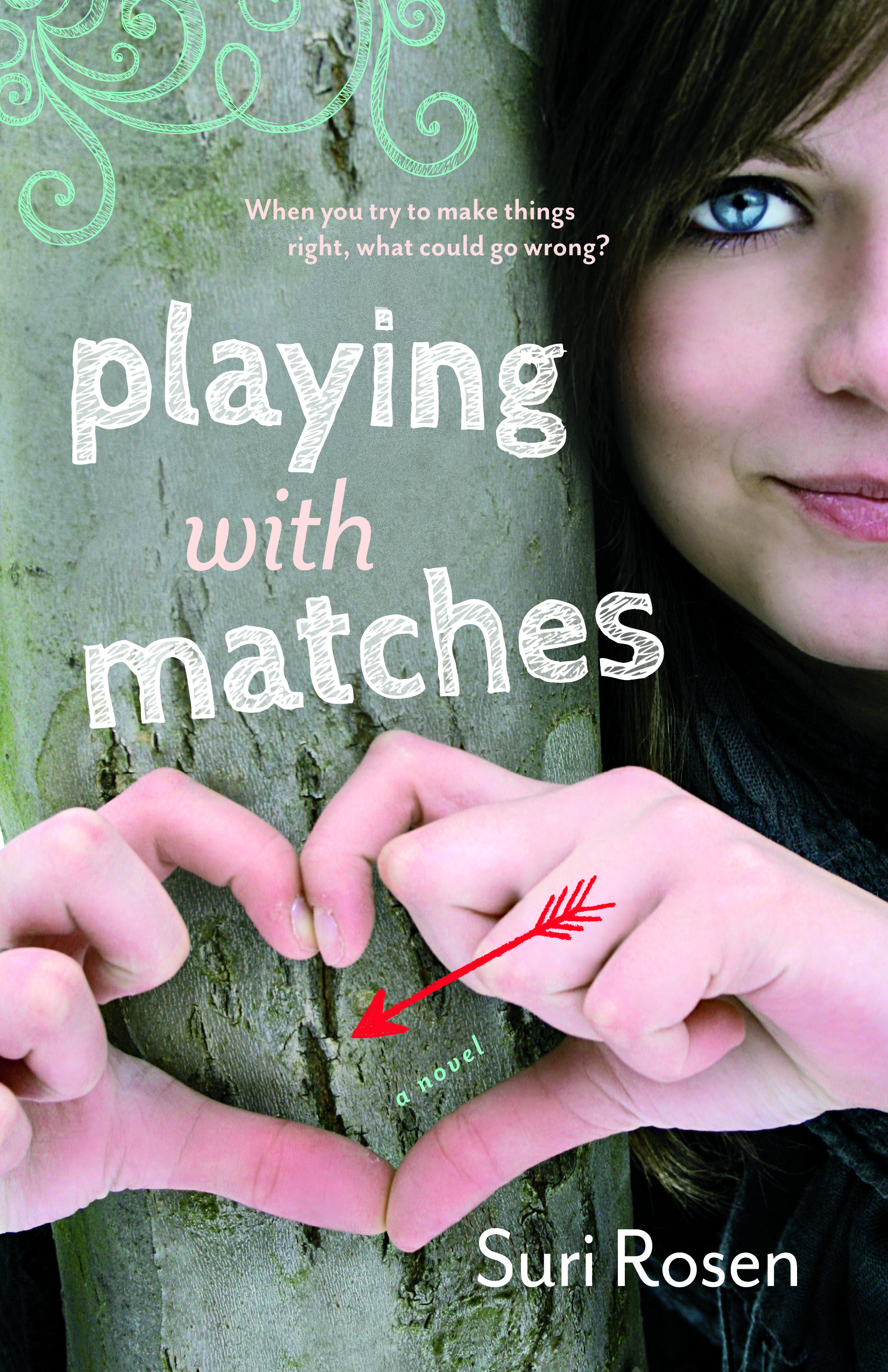
Today, I have the pleasure of sharing with my readers an interview with Suri Rosen, the author of a new YA novel, Playing with Matches. (You can find my review of the highly-entertaining Playing with Matches here.)

PlayingWithMatches_hiRes (3)Suri piqued my interest in part because she has published her first book — a book with universal themes but with distinctively Orthodox characters and setting — with a mainstream, secular publisher. Most books with Orthodox themes tend to be published by Jewish publishers. I conducted this interview last week via email.

RK: This is your first novel, but as many of the reviewers have noted, you write with real skill. In particular, you handle Rain’s voice with humor and confidence.​ Have you published other genres before, taken classes, or to what else do you attribute your success?

SR: I’ve always been writing. (I cover this in detail on this website,’Dear Teen Me.’)

I read numerous books and blogs about writing and spent countless hours discussing technique with other novelists. But the most important aspect of becoming a publishable author  – to me – is getting feedback. Giving a critique also sharpens your craft but getting a critique to me is the single most important factor in developing yourself as a writer.

And it can be brutal! Continue reading

Writing ethics: Defining your voice by what you don’t write about as much as what you do

Okay, so last week I mentioned how much I admired Nina Badzin’s article for TC Jew Folk, “Things I Don’t Write about on the Internet.”  

I pretty much agreed with her on all points, although I will occasionally get political. (This is pretty much conditioning on my part: no meal shared with my family during the 1980s did not involve bashing of the Republican Party, so far as I can remember. But my memory might be faulty. Not that I’m a Democrat. Currently, my party membership is officially “decline to state.” You can do that in California.) 

Anyway, there was one thing not on Nina’s list I kept thinking about while reading it, and it has haunted me ever since:

I DON’T TELL OTHER PEOPLE’S STORIES.

What are “other people’s stories?” Continue reading

Writing conundrum: Leaving behind that outline without creating problems

So, I’m back to cranking out chapters of my serial this week, and this time, I hope to do it a little faster. The quicker I finish the serial, the easier it will be for me to focus on other projects, I think. Anyway, something is happening as I write that I think is worth mentioning, because I sincerely doubt that I’m the only writer to experience it.

In the beginning, there was an outline…

serial title imageIn order to secure my gig to write my current serial for Binah BeTween (“Glixman in a Fix”), I had to prepare an outline. Once that was approved (along with character profiles, the summary, and so on), I started writing. Generally, I write the serial episodes — I might have mentioned this before — in blocks of three, basing them on the outline. Because I’m working from an outline, with characters who are now well known to me, the writing goes relatively quickly. Then I revise the rough drafts once or twice and send them together in a batch to the editor.

Recalibrating

We’re now more than a third of the way in, and more and more often, I find that I’m diverging from the outline. Continue reading