A Fun Editing Gig, almost Complete!!

(Yeah, yeah, yeah…I know, I missed my Wednesday post. But here I am, making it up to you just one day late.)

I thought I’d share a little bit about one of my editing gigs, which is just about wrapped up now. I’ve been consulting with Ganit and Adir Levy about their upcoming picture book, What Should Danny Do?

The Levys came to me several months back with a rough draft of their picture book. At the initial consultation, I gave them a list of changes to make and issues to address. They had a lot of questions for me, too, and we scheduled a series of meetings where we inched towards that final draft.

What made the Levys such a pleasure to work with was their persistence. So many writers panic when presented with rigorous WORK. They question whether they are good enough, they let a critique get them down, and they give up…or they simply blow off insightful feedback and continue about their merry way while ignoring the advice which would have made all the difference for their book. The Levys took criticism in stride, chose carefully what to accept and what to decline, and then tinkered and tinkered until they were happy with their text.

What Should Danny Do? is nearly ready to go to print, and I couldn’t be more excited. Today, we did one final copy edit. I’ll give you more information when we get closer to the release date.


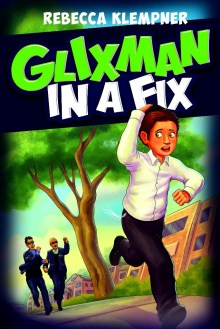
Glixman in a Fix on Approach: Got the Cover for My Next Book & Checked the Proofs

glixman31Yesterday, I turned in my comments on the proof for my next book, the novelization of Glixman in a Fix. It’s weird reading something I wrote a couple years ago, already. I think the manuscript is in pretty good shape. We’re IY”H expecting the book to hit stores just before Pesach.

The good news is that I made myself laugh more than once, and I still find the characters charming after all this time. When I read the last page, I contemplated writing a sequel just so I could hang out a little longer with Mendel, Ari, Ilan, and Yehudis.

The bad news is that friends and colleagues are now telling me how they all want to buy my book. This leads to a potentially awkward conversation.

Some of the aforementioned friends and colleagues primarily have read my adult work. They read my essays in Tablet, my fiction in Inyan. I think that many of them expect me to sound the same in this book…but since the initial audience was so different, I sound very different in Glixman. I’m kinda afraid how they will react to it.

Readers out there, have you read something from a favorite author that just didn’t strike your fancy?

And writers, have you written something and then felt the desire to warn your usual readers away from it?

Writing Groups Run for Pay Are Useful…But Not the Same as No-Fee Writing Groups

After last week’s post, in which I explained how to set up and run writing critique groups and manuscript swaps, I got some feedback, and I’d like to address one of the issues that came up.

What to expect if you pay for a professionally-led writing group:

There are many writers/editors, who run critique groups for a fee – and I am among them. Usually, the organizer will do at least some of the recruitment for you, and they have genuine expertise. (Although I suggest you check on this – recently, I came upon a writer who offered advice – for a fee – to a person in a field of writing it turned out they knew nothing about. There’s nothing wrong with asking for a reference even if the person is a published writer of note. Not all writers know all fields of writing, and not all writers are good at running critique groups.) Good writing group leaders are familiar with the “writing group format” and may have a very gentle and efficient way of keeping participants on-task and well-behaved. They will often arrange the logistics of the location/conference call/whatever.

Interestingly, since participants usually pay in advance for a series of meetings, they are more likely to show up. I have a close friend who is a personal trainer, and she says her clients have the same attitude: If you pay in advance, you are more likely to show up, because you know your absence will cost you money, and yet you will get no benefit from that money. For a fledgling writer who really, really needs a fire lit under their tuchas to make them show up regularly for a writing group, this has a big advantage over a free model.

I know many, many people who have enjoyed and learned a lot in writing groups run by a paid professional. A really good writing-group-for-fee is worth the price you pay. However, I don’t classify them with lay-led, no-fee groups for a number of reasons. Examining these will help a writer decide which model will work best for them. Continue reading

Step-by-Step Guide to Setting up a Writing Critique Group or a Manuscript Swap

A little birdie told me what to write about this week.

Okay, I’m exaggerating. But recently, quite a few people have either asked me how to advance their writing skills (answer: join a critique group) or how to arrange a critique group or what they should do if they cannot attend a critique group. And while I’ve discussed critique groups on the blog before, I think it’s worth a new blog post dedicated to this topic, because I’ve been helping run critique groups for nearly five (or is it six?) years now, and I’ve learned a lot.

Why Join a Critique Group?

You only will grow as a writer if you write regularly. But motivating yourself to write regularly, with no deadlines, is challenging. Getting useful feedback can also be challenging. For instance, you might have a close friend or relative read it, but will they be objective? And you could take a class, but that might involve spending money. (Note: I think it can be worthwhile to take writing classes – but I don’t have much spare change and won’t assume you have it either.) You can remedy all these problems with a single solution: the critique group.

How to create a critique group:

Continue reading