How to write funny: what you can learn from Isaac Asimov

Asimov on Humor

A must-read for anyone who wants to write humor

When I first married my husband, I was delighted to discover among his possessions a copy of Isaac Asimov’s Treasury of Humor. I had read the book in high school and enjoyed reading it again, this time discussing it extensively with my husband.

Not only does this book contain jokes–great, classic ones–but Asimov explains why they’re funny, how to tell them, the origin of them, and if there are different versions. He explains the differences between shaggy dog stories, puns, black/gallows humor, and so on, and what makes each type tick. Asimov does this all in a chatty way that reminds you of your great-uncle shmoozing with you–it’s just so much fun.

Flash forward a few years. Continue reading

Coming clean: sometimes you’re supposed to do housework instead of writing

G-d wanted me to do the dishes this morning.

I finished a large-ish writing project yesterday, then pulled open another document to begin the next assignment. I got the first paragraph written, and then every ounce of creativity in my brain dried up. Okay, I had a couple ideas, but they weren’t RIPE. More like literary fetal tissue than the next baby ready to be birthed.

Those who know me or who regularly read my blog know that I rarely get writer’s block. I usually have more ideas in my mind than really is good for me. Sometimes I can’t sleep at night, because my mind is so busy that the ideas are dripping out my ears.

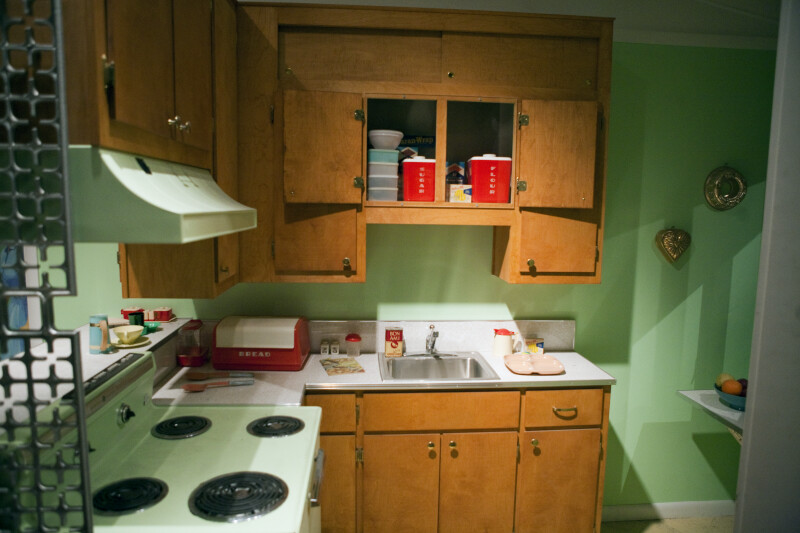
kitchen photo

See this immaculate kitchen? Clearly not mine.

I spent the rest of yesterday taking care of my kids, feeding them and hubby (not to mention myself), and finishing Bird by Bird. (More on that later this week.) Then I had a Tiferes meeting, but before I left, I checked my email. A girlfriend would be dropping by Tuesday morning.

Oh, no.

You see, my back had been out, and then there had been Shabbos, and then I was writing on a “finish ASAP–please!” type deadline. Result–my house was a wreck. Continue reading

2 Major differences between writing a picture book and writing short stories

So the folktale project turned out to be an eye-opening experience for me.

scissors

Am I a writer, or a barber?

When I first started writing for kids, I didn’t really understand the difference between short stories and picture books. I’d submit short stories to book publishers, and picture books to magazines who published short stories. Selling Raizy and being guided through revisions by Devorah Leah Rosenfeld, the editor at Hachai, schooled me in the differences between the two media. After a couple years, I started writing regularly for children’s magazines, and her lessons allowed me to jump between the two formats.

2 Major differences between picture books and short stories:


1) The length differs significantly in the two formats. Oddly, an entire picture book has about half the words (sometimes less) as a short story for a kids’ magazine.

2) The illustrations in a picture book replace almost all the description. And the only words that could appear in a picture book text are ones that drive the narrative forward. When I learned this lesson, my picture book writing attained a sharpness that it had previously lacked.

Continue reading

Early birds and the people who hate them–the writing habits of a morning person

Swallow feeding worms to her chicks

I may be an early bird, but I promise I don’t feed worms to my kids for breakfast.

I’m almost ashamed to admit it, but I am a morning person. Why the shame? Because I have discovered that there is nothing that night owls hate as much as the behavior of us early birds. And it seems that there are a lot of night owls around, judging but the fuzzy eyeballs cast in my direction at 7 am, when I smile and bounce and chirp, “Good morning!” at them.

When I lived in that sleep-deprived state induced by having an infant at home, my natural biorhythms were completely disrupted. Continue reading

The 2 easiest ways to write books yet

 Snowflakes

Picture credit:
http://etc.usf.edu/clipart/24300/24305/snowflakes_24305.htm

For a while now, I’ve been a believer in the Snowflake Method. It was invented by Randy Ingermanson as a way to build your novel in a structured, yet streamlined way, and it does just that. I came late to it, as my novel had started off as a short story, then had expanded to much more than that. I wish I’d got to the Snowflake Method sooner–it would have prevented me from floundering about quite as much. There are other ways to create a novel with discipline and skill–but this has always seemed to me just about the easiest. There’s even a computer program that can help you with the method.

However, there’s new tool that makes creating a book possibly even easier. Building on a successful blogging format, the folks at PressBooks have designed a online tool that adapts the WordPress platform for the purpose of making a book. The writing process becomes as easy as managing a blog, using the same familiar, simple tools.

The webware is free, and can be used collaboratively (multiple authors can have access to your book-in-progress at once, just as with a blog). Each post is roughly one chapter. You can take your document and covert it to a PDF, epub, etc. It can also be used for a POD (Print On Demand) service, if that’s what you want to do. The design of the book is reportedly much more refined than in most do-it-yourself POD products.

I’m skeptical about its utility for novel-writing (although if you want your final product to seem like a fly-by-the seat-of-your-pant serial, where what happens next might surprise the author as much as the reader, it might be okay). It’s too linear, where a good novel is usually built in layers. However, if you are working on a non-fiction book project with colleagues, I imagine it would be outstanding. Check more about it out at: http://pressbooks.com/about

“How do you do it?” How to write while you’re a stay at home mother

People often ask me this question: How do you find time to write? Other moms work outside the home, sometimes full-time, yet my extremely-part-time and mostly at home writing puzzles them. Life as a FT mom is so wild and wacky, my head buzzes with ideas that could make great kids’ books. Doesn’t yours? This is how to get the ideas out and coherently on paper:

First of all, I have a giant notebook. Inside, I write lots of lists. Some titles you’ll find in my notebook: funny things kids do; annoying things kids do; what kids fight about; excuses they give; sweet things kids do. Don’t just email your girlfriend or tell Mom or Hubby about the craziness you endured during the day–write it down, even just in shorthand.
Also, after a workshop by Sarah Shapiro, I’ve learned to listen and practice writing dialogue. She says to do it daily, but I’m not that good about it. Just copy down a short conversation every week or so, and you’ll get practice.
Read LOTS…then respond in a book club, blog, or by writing a review online. If the book gave you an idea, extend it as far as you can.
No T.V. means more time and more productive time is available in this house.
After you write, revise. Test out on friends by sending your story to them or by joining a writing group. Then revise more according to what they suggest, then re-read to them. Is it improved?
Figure out who publishes similar pieces to yours, get the submission guidelines, then send the manuscript in! You’ll never know if you might have succeeded if you never try.
And remember, rejection letters are good for your middos.