Time to be funny! Turn things upside down! It’s really Adar this time. I promise.

Okay, so for those who have no idea what the title of today’s post means, I’ll clarify:

Don't you wanna dress up for Purim?

Don’t you wanna dress up for Purim?

The Hebrew month of Adar contains the wacky holiday of Purim. The thing is, when there’s a leap year, there’s an entire extra month of Adar–because if you’re going to have a month that comes twice, it might as well as be the one that’s known as the happiest of the year. But there’s only Purim in the second Adar.

After a month of tolerating a giant “SIKE!” the second Adar of 5774 started yesterday. Jewish kids everywhere are going crazy. Continue reading
How writing a novel differs from writing a screenplay: my last post on STORY

After reading my earlier posts on STORY, you might think I’m 100% sold on the book. I have to admit that I’m a fan, but I do have some quibbles, largely on the adoption of screenwriting techniques for short story or novel writing.

Differences between writing for readers and for viewers that limit the utility of STORY:

1) (The only one I noticed pointed out by McKee) You may get inside the characters heads and explore their thoughts in literature. This creates a greater intimacy between the narrator and the reader. It also means the conflict can be much more subtle and much more interior.

2) Some readers like descriptive, sensory details that can’t be experienced with film — smell and touch can be better evoked, for example (unless you’re viewing in smell-o-rama).

3) The audience must work harder when reading print–in a good way.

4) When contrasted with other useful literary guides, you see some shortfalls. Continue reading

Most writers procrastinate. But why?

My best friend and fellow writer, Cy, sent me a link to an article in the current Atlantic about why writers are infamous procrastinators. Read it here and tell me what you think. And don’t forget to include the reasons you procrastinate in your comment. Personally, it took a relative taking me aside and disabusing me of the notion that talent is the source of success (or even deserves any praise). But my current biggest barrier to writing is poor time management. I tend to pick distractions or less important writing tasks over the more serious ones.

More about McKee’s STORY: How two of my stories measured up

I’m still reading STORY and have so much to say on its utility that you’ll just have to bear with me for a few more posts on it.

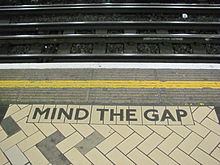
THE GAP

victoria station tube mind the gap

Writer! Mind the gap!

McKee has a theory that the material a story is made of is not words, not paper and pen (or computer) but something he calls the GAP. The Gap develops when a main character acts and discovers that his/her expectations regarding the response s/he’s going to get conflict with the reaction s/he really gets. This discrepancy forces the character to adjust and change.

Continue reading