This story does not stop here!

For the last week, I’ve been struggling with a major rewrite of a short story. Basically, the character was not so likeable, her journey was boring, and the ending was very, very lame.

The problems with my Lame-O story:

This was already the third or fourth draft of the story. I’d originally written it for a particular venue, who rejected it. Later, it was accepted for a different one, conditional on me completing a satisfactory rewrite.

The main structural changes the editors asked for were the removal of one subplot (and the scenes both where it was introduced and where it was resolved) and a new ending.

I cut out the subplot. No problem. I wasn’t entirely attached to it.

But still not done!

Now my story had a new problem Continue reading
Professional empathy: writing and anthropology

author and anthropologist

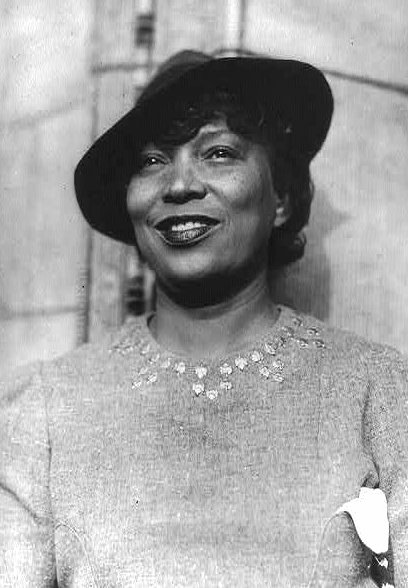
The incomparable Zora Neale Hurston

Earlier this week, Google celebrated the 125th birthday of Zora Neale Hurston. Best known for her novel Their Eyes Were Watching G-d (which has one of the most suspenseful and gut-wrenching scenes I’ve ever read), Hurston was also an trained anthropologist. Much of her non-fiction work consists of the retold folktales she uncovered during interviews in the deep south during the Great Depression.

Anthropologists as writers

This got me thinking about the whole issue of writers with training in anthropology. While I never actually “practiced anthropology” professionally, I have a Master’s in Applied Anthropology and feel that the reading, classwork, and fieldwork I did during my training has had a deep and lasting influence on my writing (and teaching and pretty much everything else I do, by the way).

Hurston and I are in good company. Continue reading

Thank the folks who’ve rejected you–a radical suggestion for writers this Thanksgiving

Last year’s Thanksgiving post deserves a second helping. And if you need more reasons to thank G-d for your rejection letters, check out a story by Nina Badzin here.

beccakinla's avatarRebecca Klempner

Thanksgiving is upon us here in the U.S., and this is a wonderful opportunity to reflect upon gratitude, whether you celebrate the holiday or not. I’m a big fan of Rabbi Zelig Pliskin and also of Rabbi Shalom Arush, and I’m going to combine their approaches for this writing exercise appropriate to the Thanksgiving season and year-round. This exercise is useful whether you’re Jewish or not–please don’t get turned off to it just because it was inspired by a couple of rabbis.

Rejection is just about the hardest thing to cope with when you decide you’re going to become a writer, but it’s something that you need to learn to accept graciously. When that rejection letter first comes, you are often overwhelmed by feelings of resentment, anger, and frustration. You might lash out, calling the editors idiots or saying that the publisher doesn’t know what good writing is. You…

View original post 441 more words

In the Courtyard of the Novelist: An interview with Ruchama King Feuerman

I’ve got a treat here today: an interview (conducted via email) with award-winning author, Ruchama King Feuerman. Her latest book, In the Courtyard of the Kabbalist, just came out in September as an ebook. Recently, she signed a contract to expand the release to paperback. I became acquainted with Ruchama through Tablet Magazine online, where both of us have published essays. She was gracious enough to send me a copy of her new book and even more gracious to answer a few questions the novel left me with.

R.K. – In your first book, Seven Blessings, the central figure is a very strong female character. In this new book, you primarily follow two male, unmarried characters. What was that like for you as a married woman?

new book from Ruchama King Feuerman

In the Courtyard of the Kabbalist, now out from NYRB LIT

R.K.F.I prefer writing from the male point of view. This way I don’t worry about slippage, about parts of  my personality leaking into my characters, it’s just cleaner — what’s me is me, and what’s them is them.  I feel much freer to invent and have fun when I write as a man.  I do tend to prefer singles maybe because they are inherently dramatic. Continue reading

Creating convincing inner conflict in characters

Literary inspiration comes from some weird places.

Case in point: What I learned about writing from mussar

On Shabbat, I mostly stick to reading materials with Jewish content. This is just one of the ways I make it distinct from the other days of the week. Over the last several months, I’ve been nickel and diming it through Strive for Truth, Rabbi Aryeh Carmell’s English translation of the Michtav Me’Eliyahu by Rabbi Eliyahu Dessler. This book is considered a classic of mussar, the refinement of character through the lens of Torah.

When I say “nickel and diming it,” I mean this: read a couple pages, realize I didn’t really get it, re-read. Take a nap, shmooze with my husband, or hang out with the kids; pick up the book again. Realize I don’t remember how we got to this part of the essay, then backtrack and again re-read the last couple paragraphs before hitting some new material and starting all over again.

Kinda like reading Durkheim. Really heavy stuff.

Anyway, this week, when I picked up Strive for Truth after Shabbat dinner, I was forced to re-read the first half of the essay I’d begun last week. The essay is about free will. Continue reading