School is on and I’m back to work!

The kids are back in school, and I am back to work. For four days, at least.

school, classroom

When the kids go to school, Mommy gets to write!

Because of the unfortunate discrepancy between the Jewish calendar and that of the traditional American school, my children will not experience a full week of school this fall until October. That means that even though their summer vacation is over, my days of child-wrangling are not.

It’s really important to me to take advantage of time alone during the day. I cherish the time I get to spend with my kids over summers and holidays, but when they are home, I can only write at night. Unfortunately, I am decidedly a morning person. The quality and quantity of what I write is strongly affected by my kids’ days off.

So today I tried to be as productive as possible. I got to pray at length, spent a couple hours on a story, took care of some housework, and made sure to listen to some music.  As a treat, G-d sent a playdate for my preschooler to extend the quiet a little longer.

One of the areas I’ve decided to work on this new year is time-wasting, so I tried very hard not to lose too much time to unnecessary internet surfing or checking my email repeatedly. I fought off the time wasting habit better than I expected today.

Who knows what tomorrow will bring? And Friday, for sure, will be spent minding my kids and preparing for the Yom Kippur fast. Sukkot will start just a few days later. But at least this evening, I’m wrapping up a workday feeling I did my best, B”H.

New Jewish year, new books by Jewish authors!

The new Jewish year is marked this time around with several new book releases that have me very excited:

1) After being mesmerized by The World to Come and In the Image, I can’t wait to read Dara Horn’s newest, A Guide for the Perplexed, which was officially published today. An essay by the author appeared in The New York Times this week, reminding of the book’s release. The topic was the role of memory in literature — particularly in Jewish literature — which Horn tied to Rosh Hashanah. (The holiday falls later this week, and it’s also known as “The Day of Remembrance.”) Her new novel reportedly draws on this theme as it follows two contemporary characters obsessed with the work of the Rambam.

in the courtyard of the kabbalist

Ruchama King Feuerman’s latest, just out

2) Ruchama King Feuerman’s In the Courtyard of the Kabbalist follows an assortment of characters in Jerusalem. I’m very blessed that the author has sent me an advance copy — a review here on the blog will be forthcoming. I was a big fan of her last book, Seven Blessings, as well as some of her more recent, shorter work. Feuerman has been called “a Jewish Jane Austen,” probably because her character portraits so marvelously balance positive and negative qualities. I’m already a few dozen pages in to the new book and really getting into it. For a recent review, see here.

3) Ofir Touche Gafla’s The World of the End will soon be published in English. Continue reading

It’s the week of Shavuos!

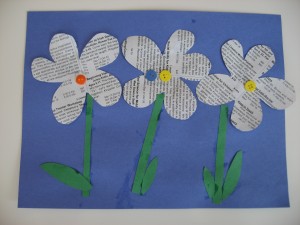
Things have been a bit crazy in the Klempner household as of late. We’re already in the week of the Jewish holiday of Shavuos, the subject of my picture book, A Dozen Daisies for Raizy.

A few weeks ago, in honor of the 5th anniversary of Raizy, I asked librarians, teachers, and parents about how they’ve reacted to Raizy. Here are some of the responses:

From fabulous librarian Davida Levin, of the Torah Day School of Atlanta:

I love using the book every Shavuos with my K-2 library groups, and was delighted that several of the 1st and 2nd grade girls said that they also own the book.

This year we talked about what the daisies meant to the recipient and decided that they meant “I like you” or “I care about you”. The second graders were able to  say that the flowers were a reminder of Raizy’s invitation or offer of help.  This year I gave the girls the attached pages to fill in during check out time–one even suggested that you could send them to Hashem, but another was sure that Hashem can make His own flowers.

Here’s a copy of the handout she used. Feel free to borrow it, but give credit to Davida, okay?
Regular Binah and Inyan writer Rochel Burstyn says of Raizy:
I worked a few years ago in a playgroup and it was one of the kiddies’ favorite and the only ‘long’ one I could sit through!
Another fan of Raizy, Chani Fischman, wrote me to say:[m]y daughter has brought your book, A Dozen Daisies for Raizy, home from her school library a few times and we’ve enjoyed reading it together at bedtime. I like the fact that 1. The book is not too wordy (I hate wordy children’s books) 2. The pictures are vivid. 3. Subtraction becomes so clear to children without them realizing that they are actually doing a mathematical operation.

Last year, I gave out a couple craft ideas to create daisies for Shavuos following a school visit I did here in L.A. Here are a few more last-minute ideas, with an emphasis on projects that are particularly kid-friendly and can be done mostly with stuff you can find around the house:

daisy craft

Recycled kid’s project for Shavuos.

Have a great holiday everyone!

Kveller writers talk G-d with their kids

The Jewish parenting website Kveller is running a series right now on parenting. They’ve got 5 perspectives so far, and I have to admit I have mixed feelings.

They seem to have picked some extreme situations–a mom who clearly has OCD, a kid who has chosen Communism over Judaism–but also some pretty normal ones, like the soon-to-be dad finally realizes the fate of his unborn child is out of his hands and chats with G-d about protecting him and (this had me laughing both out of amusement and empathy) the mother whose kids imitate G-d saying, “No!” to each and every request she makes at a trying stage of life.

What surprised me most is that so far most of the parents seem to not have thought about what they would say about G-d before talking about Him with the kids. Some of the stories are frankly depressing, like watching the blind leading the blind. Not surprisingly, their fumbling responses get some pretty sad results.

But I just love that a non-Orthodox (at least, not only Orthodox) Jewish website is hitting this issue, which largely goes undiscussed in polite American circles. And we’re getting a real glimpse into American Jewish households to see what’s going on in there.

It’s pretty harrowing.

Sure G-d says, “No,” an awful lot. But what about all the times it turned out good for you?

What about saying, “Thanks, G-d!” every time you experiences a moment of joy? “Thanks for the parking space!” and “Thanks for there being exactly enough cupcakes for us all!” make an impression on kids as much as all those heaven-sent No’s.

What about discussing with your co-parent about how you’ll represent G-d to your kids ahead of the “Big Talk?” Because it’s as much of a Talk as the more famous one, and requires at least as much forethought.

Something that surprised me also was that no one really mentioned sharing books about G-d with their kids. A lot of the what I’ve communicated with my own kids about G-d has come from books and magazines, like  Where are You Hashem?, The Invisible Book, and Hashem is Truly Everywhere.

Do any readers out there have literature they like to share with their kids to enhance their “G-d Talk?”