What? No love triangle? How books for Jewish teens fit into current YA trends

If you ask observant Jewish teens here in the U.S. whether they overall prefer Jewish books or secular ones, most of them will tell you secular books (trust me, I write for teens, so I’ve asked). Sad, but true.

Why most Orthodox teens prefer secular books

Interestingly, some of these teens will tell you that they wish there were more Jewish books for teens that suited them. Others will tell you they don’t like either Jewish or secular novels — the former don’t engage them, and latter conflict with their religious beliefs.

Thursday, I caught an excellent article on CNN about the history of YA novels in the U.S. You can read it here. There was little that was news to me in the article, but it did make me think about something that’s troubled me for a while — namely why so many Jewish teens are enthralled by secular books that don’t necessarily reflect the values of their families.

Let’s consider why secular YA books are currently selling like hotcakes. Continue reading
New Jewish year, new books by Jewish authors!

The new Jewish year is marked this time around with several new book releases that have me very excited:

1) After being mesmerized by The World to Come and In the Image, I can’t wait to read Dara Horn’s newest, A Guide for the Perplexed, which was officially published today. An essay by the author appeared in The New York Times this week, reminding of the book’s release. The topic was the role of memory in literature — particularly in Jewish literature — which Horn tied to Rosh Hashanah. (The holiday falls later this week, and it’s also known as “The Day of Remembrance.”) Her new novel reportedly draws on this theme as it follows two contemporary characters obsessed with the work of the Rambam.

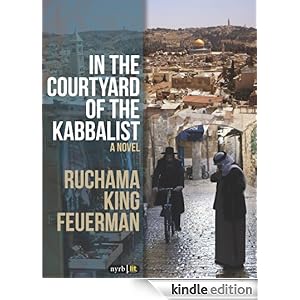
in the courtyard of the kabbalist

Ruchama King Feuerman’s latest, just out

2) Ruchama King Feuerman’s In the Courtyard of the Kabbalist follows an assortment of characters in Jerusalem. I’m very blessed that the author has sent me an advance copy — a review here on the blog will be forthcoming. I was a big fan of her last book, Seven Blessings, as well as some of her more recent, shorter work. Feuerman has been called “a Jewish Jane Austen,” probably because her character portraits so marvelously balance positive and negative qualities. I’m already a few dozen pages in to the new book and really getting into it. For a recent review, see here.

3) Ofir Touche Gafla’s The World of the End will soon be published in English. Continue reading

To outline, or not to outline, that is the question.

I just viewed this interesting slideshow on Flavorwire containing outlines by famous writers. I use “outlines” in a broad sense–several were more like graphic organizers than true outlines. I had a weird reaction to the piece.

Usually, I start stories with clusters or notes, not with actual outlines, unless we’re talking something big–a serial (even a mini-serial) or a novel. Sometimes, I cross out and draw arrows to rearrange the elements so often, I end up rewriting the whole thing a few times because I no longer can read my own diagrams.

In most cases, these scribbles remain private. However, I happen to be working on a project right now where the publisher requested an outline first, but that’s never really happened before.

Several of my friends tell me they just start writing. They skip the outlines, diagrams, and charts and words just start to flow.

This slideshow bizarrely made some part of my brain do a superiority dance. “I am in good company with other prewriters,” it seems to say. “Just look at me with the likes of Henry Miller, William Faulkner, Sylvia Plath and Joseph Heller!”

This is utter nonsense. Plenty of writers do just fine without scribbling diagrams, outlines, or the like first, particularly if they are writing short form.

Are you an outliner? Why or why not?

Which part is historical and which part is fiction? My Semi-official 39 Clues Rant

Book 10: Into The Gauntlet

It’s by the fantastic writer Margaret Peterson Haddix. What’s there not to like?

This post might get me in trouble with my kids, but so be it.

In case you don’t know The 39 Clues is a book series for middle grade readers (roughly kids 8-12). I think the initial target audience was older, but that’s who’s reading this series in my neck of the woods.

Kids love these books. They are exciting and are so engaging as to be addictive. Tweens clamor for more titles, which are delivered to bookstores at an astonishing rate. They are written by some top names in kids’ lit, like Rick Riordan, Margaret Peterson Haddix, and (one of my faves) Linda Sue Park. What’s there to dislike?

Here’s my beef.

The 39 Clues series freely borrows from historical fact, then elaborates on this to create a thrilling adventure for kids. Continue reading

Who’s talking? POV, Voice, and Narrator as explained in Anne Lamott’s Bird by Bird

book cover

Bird by Bird by Anne Lamott

There are few books that come up with my writer friends more often than Anne Lamott’s Bird by Bird. In the same way that I feel like I’m not quite smart enough because I’ve never taken Calculus, I’ve felt like a slacker because I never got around to reading it.

And I should have felt guilty–because it’s great.

Okay, so it has a lot of rather vulgar language, but Lamott’s writing is so funny, and yet so useful, that I’m pretty much in love with the book.

One of the interesting bits of advice that Lamott gives writers is a gem she attributes to the author Ethan Canin. The most important way to improve your writing, he says, is to employ a likeable narrator.

Here’s the thing that struck me about this advice: for many, many years, I always wrote in third person. Continue reading

When is an author a Jewish author? Defining Jewish writing, Part 3

Last week was marked by big news in the book world. Famed-American Jewish author (Jewish meaning author’s ethnicity only, in this case–see previous posts on the subject) Philip Roth has declared that he’s retiring from writing. On the other hand, equally aged and famous American-Jewish author Herman Wouk has just put out another novel. Interestingly, these events didn’t just make headlines in Jewish publishing, but publishing as a whole.

The stereotypical Jew is considered “bookish,” pale due to the amount of time he spends indoors. We are called “the People of the Book.” How is it that Jews became inextricably interwoven with books? Continue reading