Writing for Children: not for those who want glory, fame, or big bucks

Last week’s Hamodia/Inyan Magazine had an article by one of my favorite columnists, Rabbi Fishel Schachter entitled “Guided by Tale Winds.” While today Rabbi Schachter is well-known in the Torah world for essays and presentations for adults about the weekly Torah portion, parenting, and other subjects, he first gained popularity as a rebbi and storyteller to students in Jewish day schools.

Rabbi Schachter explains in the article that one of the adults in his audience told him many years ago that he had to choose between teaching grown-ups or kids — and he indicated that the natural choice for a man of Rabbi Schachter’s talent and intelligence was to teach adults.

Turning to his own rebbi for guidance, Rabbi Schachter asked if teaching kids was really beneath him? Were all the silly voices and so on undermining his stature?

Continue reading

4 Questions for author Tamar Ansh about her new Passover cookbook

I recently conversed via email with the enormously popular author, Tamar Ansh, about her new cookbook. Let My Children Cook! is her first cookbook for kids, and it tackles a particularly pertinent area of Kosher cuisine for this time of year: Passover.

ansh book cover

Tamar Ansh’s latest cookbook, out in time for Passover!

4 Questions:

Rebecca:

What made you want to write a cookbook for children this time? And why specifically one for Passover?

Tamar:

For this book, Let My Children Cook!, Hashem sent me the inspiration from a totally unexpected angle. Continue reading

My completely unsolicited review of “Megillas Lester”

After all my recent ranting and raving about Esther in pop culture, I watched a video this afternoon with the husband and kids that made me feel better. I’d first heard about it on Tablet, then on the OU’s website.

animated video kol rom

Megillas Lester–a hilarious film in the Purim Spiel tradition.

Kolrom media, who has produced a lot of music videos and shorts for the Orthodox audience (like the video for the song “Ana Avda” and a hilarious bit on Aish.com called “Sicko” about how NOT to do the mitzvah of visiting the sick), has just released a video about Purim that refers to all the midrashim and commentaries I talked about in my rant. And it’s funny. Although Esther doesn’t make an appearance. Even Mordechai barely shows up.

That’s because “Megillas Lester” is about a boy, Lester, who dreams he has messed up the Purim story so much that Esther doesn’t have a chance to become queen. And Mordechai doesn’t get a chance to save the king. So who will save the Jewish people from Haman’s evil plot? Continue reading

This Birdie Has Tweeted

I’m mortified. Having recently come to grips with the necessity of getting a Facebook account, I’ve now succumbed to Twitter. You can’t apply for the new Amtrak Artist Residency program without it, and you can’t get some writing gigs without it (because they want you to publicize), and now I’ve joined the flock.

I actually took a class last year about Social Media from Carol Tice and Linda Formacelli, and so I’m not totally incompetent at stuff like this. I just feel like I’m incompetent at this kind of thing.

If you’d like to follow me on Twitter, you can find me @KlempnerJots and read what I’ve got to say about about the world of books and magazines and all sorts of random things that appeal to me.

The Role of Periodicals in Jewish Life: Rob Eshman’s “Why We Write”

I read a fascinating essay in The Jewish Journal today.

Publisher-about-to-go-on-sabbatical Rob Eshman relates a recent visit he had with young Israelis, when he had the opportunity to explain why Jewish newspapers have had such a prominent and consistent role in the life of Jewish Americans.

The major reason Eshman highlighted was the importance of communication between communities and unifying them to promote certain, common agendas. He also touched on how this role has changed, from an institution what taught Jews how to become good Americans–find jobs and acclimate to their new environment–to an institution which “teach[es]Americans to be Jews.”

Teaching Americans to be Jews

This latter element particularly struck me. As Eshman mentioned, many Jewish magazines and newspapers exist primarily on the web. In fact, that’s where they now find the majority of their readers.

Jews who live outside major Jewish communities–due to geography or due to a lack of affiliation–can now access information about their co-religionists via websites like The Jewish Journal‘s, The Forward‘s, Kveller, and so on. Need a latke recipe? Look online. Need advice about how to handle the funeral of a relative? Look online. Such sites bring community to people who previously felt excluded.

In the Orthodox world, even, you find magazines devoted to Jewish cuisine, divrei Torah (words of Torah, including all of Tanach, the Oral Law, and commentaries), inspiration, and advice from the Jewish standpoint.

What’s your favorite Jewish magazine or newspaper? Why? What role do you think periodicals have in contemporary Jewish life? Please share your comments.

Megillat Esther through the eyes of a 21st century writer, or It’s okay if G-d saves the day if there’s forshadowing

This year, in preparation for Purim, I’ve been rereading the megillah at a class given by my LOR (local Orthodox rabbi). Of course, it’s not the first time I’ve read The Book of Esther, as it’s called in English. We do that every year on Purim–twice! And it’s also not the first time I’ve learned it with this particular rabbi. But it is the first time I’ve read it with commentary, guided by my rabbi, since I officially became an author (whatever that means). And boy, is there a difference.

The Big Literary No-No All Over the Megillah

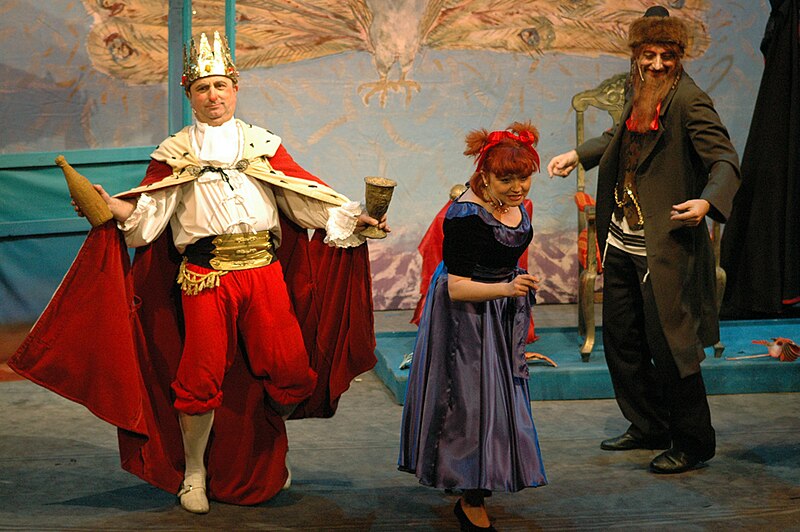
book of esther theater poland

A Purim Spiel in Poland. Photo shared in the Wikipedia Commons by Henryk Kotowski.

When you’re writing fiction, there is a big no-no that you’re told never to do: rely on deus ex machina. In short: don’t get your characters out of a tight corner by dropping a deity down from the sky to perform an instantaneous rescue. The audience will roll their eyes, at best.

The term originated with actors playing deities in the theaters of Greece. But for a religious writer of a different persuasion in the 21st century, it causes problems. Continue reading