Abandoned but not forgotten: My startling discovery about the websites of my past

surprised man

“No, really?”

This past weekend, I visited a couple of websites/blogs that I designed in the past but that I had stopped maintaining because they simply zapped too much of my time. One is about running “mommy camp” for your family over the summer, the other is about finding cheap, “kosher” fun around Southern California for families and date nights. I was curious to know how they are doing, because ever since the local day schools went on Chanukah vacation last week, I’d been receiving emails and phone calls for activity recommendations. I wondered how many people had headed to my website instead of to the phone.

Lo and behold! The sites are actually doing quite well. Continue reading

Why I think speculative fiction is just SO Jewish (& you should, too)

One of the things I most like to write (and find it hard to sell) is Jewish speculative fiction. Speculative fiction is a wide-ranging label that includes genres like fantasy, science-fiction, and horror. Basically, in speculative fiction, the author suggests a scenario that proposes the question: “What if_______?”

What if…

…you found out that you weren’t a friendless orphan but a powerful wizard with many supporters? (Harry Potter)

…you discovered the back of the wardrobe led into a magical realm where you became royalty? (Narnia)

…you discovered there was a way to communicate with aliens through your dental work? (Fat Men From Space)

…you accidentally returned to the time of the Holocaust during your Pesach Seder? (The Devil’s Arithmetic)

While Isaac Asimov, Jane Yolen, Harlan Ellison, Daniel Manus Pinkwater, and many other secular Jewish Americans (as well as the Orthodox writer, Michael Burstein and the Israeli writers Lavie Tidhar and Nir Yaniv) have written speculative fiction to great acclaim–even Jewish speculative fiction–specifically Orthodox Jewish speculative fiction is much harder to find. As I have mentioned previously on my blog (and again, and again), there has been movement into this direction. But still, I get a lot of funny looks when I tell people what I most like to write.

But I don’t get it. I think speculative fiction is just SO Jewish, and so should you. Here’s why: Continue reading

But what about my Voice!?! What a writer should do when an editor asks for “a few changes.”

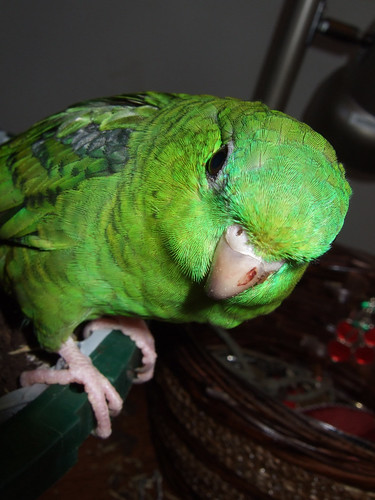
parakeet

Hey, buddy! What about my voice?

Last week, I got an email from an editor (she’ll be the heroine of this story, but will remain nameless nonetheless). She asked me to make one change–one very small change–to the story that I had submitted.

Because I trust this editor–she’s very good at what she does and has built a friendly relationship with me–I said I’d make the teeny-tiny change she’d requested.

And then I panicked.  Continue reading

Do writers hibernate? How long winter nights might affect your work habits

In the last couple weeks, my productivity level has dropped dramatically. At first, I couldn’t tell what was going on with me. Was it because I was fighting a cold? The outcome of my flu shot? Too many days with a kid home sick or Thanksgiving vacation?

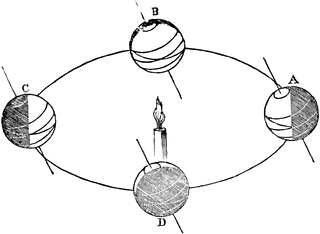
the four seasons experiment

an experiment to demonstrate the change of seasons

Then I realized that this happens to me every December–the winter doldrums. Like many others, the lack of daylight in the winter months drops my energy level drastically. I feel like a bear who wants to return to my cave to hibernate.

It’s harder to focus. I’m working more slowly, and I’m a mite less sharp. For someone who likes to accomplish a lot each day, it’s hard not to be disappointed with myself. It’s hard not to feel like a dummy when your mind goes all fuzzy by mid afternoon, and a mild case of the blues makes it hard to be my normal optimistic self. Continue reading

Tragedy! My lonely old maid of a story has been rejected once again.

I’m sure I’ve blogged about rejection numerous times at this point, but since I continue to collect rejection letters, why not continue blogging about them?

boy with letter

Mom! I think you just got another rejection letter!

Over the summer, I wrote a story that my husband adored. He likes almost all my stories, but this one he really, really liked. He particularly enjoyed the nasty anti-hero at the center of the story and the unhappy ending.

On the other hand, I didn’t like the way I’d originally executed my idea, so I set it aside for a couple months. Eventually, I brushed it off and polished it up a bit before sharing it with my writing group. They provided extensive feedback, and I acted on it, hoping that the new, much improved story would dazzle the editors. Continue reading

When is an author a Jewish author? Defining Jewish writing, Part 3

Last week was marked by big news in the book world. Famed-American Jewish author (Jewish meaning author’s ethnicity only, in this case–see previous posts on the subject) Philip Roth has declared that he’s retiring from writing. On the other hand, equally aged and famous American-Jewish author Herman Wouk has just put out another novel. Interestingly, these events didn’t just make headlines in Jewish publishing, but publishing as a whole.

The stereotypical Jew is considered “bookish,” pale due to the amount of time he spends indoors. We are called “the People of the Book.” How is it that Jews became inextricably interwoven with books? Continue reading