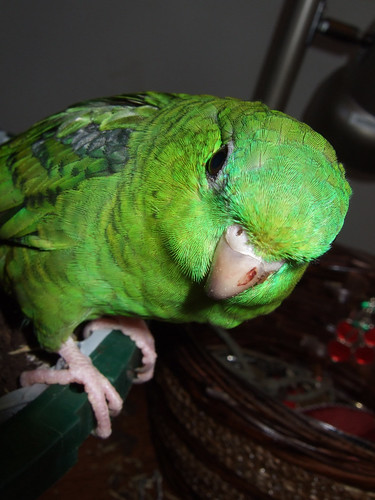
When good things happen to anxious people: the beginning of a new project

parakeet, lineated

I hope I say something original, for once.

I’m close to wrapping a piece for a magazine, and I’m waiting on the opinions of some of the beta readers of one of my WIPs, so Friday morning, I started rummaging though my old journals for some new-old project ideas. Among my scribbling, I found notes about a folktale that really appealed to me. A little research has indicated that there is only one picture book retelling of this story. Which is why, for the first time, I’m attempting a folktale retelling.

Good for me, right? It’s good to try something new, right? Continue reading

When is an author a Jewish author? Defining Jewish writing, Part 3

Last week was marked by big news in the book world. Famed-American Jewish author (Jewish meaning author’s ethnicity only, in this case–see previous posts on the subject) Philip Roth has declared that he’s retiring from writing. On the other hand, equally aged and famous American-Jewish author Herman Wouk has just put out another novel. Interestingly, these events didn’t just make headlines in Jewish publishing, but publishing as a whole.

The stereotypical Jew is considered “bookish,” pale due to the amount of time he spends indoors. We are called “the People of the Book.” How is it that Jews became inextricably interwoven with books? Continue reading

10 Ways to show your favorite authors just how much you love them

Pretend you’ve just opened up your favorite magazine. You see a name–the name of your favorite writer, whose articles you always like. You flip right to the page with their latest story and start to read.

Or maybe there’s an author you like so much that you head for the book shop as soon as their newest title comes out. Or perhaps your librarian knows they are your favorite writer and steers you to all their books.

Or maybe there’s a book you always recommend to friends, but no one’s ever heard of that author or that book before.

How do you love me (and my blog), let me count the ways…

I’ve been doing research about marketing and SEO (search engine optimization) in the last few weeks, and what’s interesting is that for writers, many of the best ways to promote our work are free—but depend on the participation of our fans to succeed.

How can you help writers like the ones I described above improve their sales and market visibility?

Here are a few steps. Continue reading

Finding Inspirational Words from Sarah Shapiro–Defining Jewish Writing, Part 2

A couple of weeks ago, some of the comments on a post I wrote about defining Jewish writing revolved around the introduction to Sarah Shapiro’s All of Our Lives. I took a workshop with Sarah–who writes, edits, and teaches amazing writing workshops that have inspired many fledgling Jewish writers–and have a lot of respect for her opinions, so I borrowed the book from a friend (thanks Miriam!) in order to more accurately represent Sarah’s opinions here.

Sarah’s essay “The Writer’s I” reflects several of the issues I discussed in my original post. Jewish Writing can be defined by the author’s identity, by its subject matter, or can be considered a completely arbitrary label. She personally feels that “all three are right,” but admits the difficulty in establishing a single definition.

Sarah goes on to say that attempts to identify or define specifically Orthodox Jewish writing are even more complicated. Continue reading

What is Jewish writing? Defining Jewish Writing, Part 1

What do you think?

Tablet Magazine asks this week, “What is Jewish fiction? What makes a Jewish writer?

This isn’t a new question. A year or so ago, there was this outstanding post on Jeremy Rosen’s blog, considering the same questions, and there are other essays on the subject published elsewhere.

Recently, the online magazine, Tablet, began to publish short fiction. The second story it selected, by young author Justin Taylor, begged the question. The characters weren’t Jewish, but more importantly, there were no allusions to Jewish literature, issues, history or culture in the story. Rabbi Rosen’s argument  would disqualify Taylor’s story as an example of Jewish writing by that token. On the other hand, the editors at Tablet certainly felt that since Taylor is Jewish, his story is Jewish.

So I ask: Is Jewish writing by a Jewish author, or must it contain Jewish content?

I’d LOVE input about this issue. Please state your ideas below. If you want to read Taylor’s story, I want to caution you, it contains coarse language.