Posted by whom? Writing under a pseudonym

Guess who?

I know it’s no longer news, but a couple months back, the author of a well-reviewed book was unmasked as J. K. Rowling, the bestselling author of the Harry Potter series. Rowling was delighted with the experience. When critics praised her outing as Robert Galbraith, she knew the compliments were genuine, that her novel really deserved them all. She wasn’t just riding on the waves created by her earlier fame.

The article about Rowling’s literary adventure stuck out for me, because at the time her identity was revealed, I had recently published for the first time under a pseudonym. I chose to do so for different reasons than Ms. Rowling: I needed to protect the identity not of myself, but of various people within my community who were part of a real-life cautionary tale.

My turn

Unlike Rowling, when my short story came out, I had very mixed feelings. On one hand, I felt that I had done a service, telling an untold story and drawing attention to an under-reported phenomenon. I hope that readers learned something from reading the story, perhaps something that will help them make different, better choices than those made by myself and several members of my community.

On the other hand, I felt it was one of my best pieces of writing ever, and no more than five people will ever know that I wrote it.

I’m writing something again that will — if accepted — be published under a pseudonym. Again, I want to champion a cause without causing embarrassment to others, and without infringing on their privacy. But it will come again at the cost of my ego.

Have any of you writers out there had the experience of publishing under a pseudonym? How would you describe the experience? Please share in the comments below.

Better Writing vs Better Sales: What makes a better writer?

Today’s post from The Write Practice got me thinking. In it, Joe Bunting suggests that we worry too much about sales, and even about how good our writing is.

I love these two lines:

Does the fact that more people have read Twilight than have read [any book by] Mark Twain mean Stephenie Meyer is a better writer?

More important for us, does the fact that we are all less known than E.L. James (as far as I know) mean our stories aren’t as good?

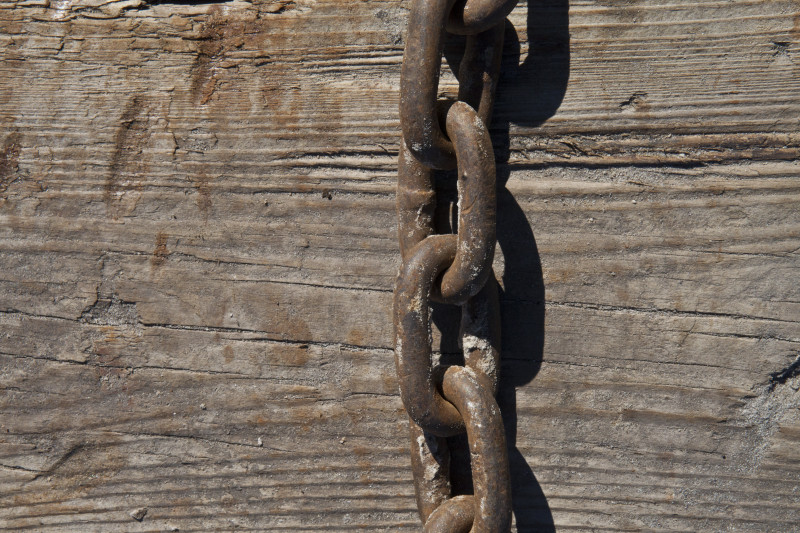
metal chain

Your writing can be the chain that binds people together.

Bunting suggests we think “Connection” (with readers) over “Competition” (with other writers).

What Bunting says really appealed to me. Of all the kinds of feedback I get from my stories and articles, the ones that mean the most are the ones where people tell me that they identified with some aspect of what I’d written–particularly if the person is really different from me. This the kind of thing that bonds together humanity. Bunting would call this kind of connection literary success.

I’d call it something else: a measuring stick to use if you want to judge your writing’s moral quotient: will this writing bind people together, or will it tear them apart with strife? In that sense, “Good Writing” has a quality beyond the writer’s style or storytelling ability. It’s “Good” in the moral sense, as well.

What do you think?

Background on my new story: “Just Perfect” (or why I believe we all live in a Magical Reality)

This week, Hamodia‘s Inyan Magazine published my new short story (and it’s actually for adults!), entitled “Just Perfect.”

The original version of the story was explicitly a piece of fantasy, but as I mentioned in a previous post, I transformed the story into an example of magical realism rather than fantasy in order to address the concerns of my lovely and knowledgeable editor at Hamodia. 

In the original version, then called “Easy as Pie,” the transformation of Libby’s life occurred after she bumped into a little old lady who offered her a slice of peach pie at a party. The pie made Libby’s life–well, just peachy. But my editor felt the little old lady was a little unbelievable. Could I cut her? The only problem was that her brief appearance at the beginning and the end of the story explained the wacky events in between.

I wracked my brains for a way to ditch the old lady but save the rest of the silliness. There had to be an explanation for it, after all. I did a bit of experimentation and research. Finally, I decided that maybe Libby should just pray–and then G-d answers.

Even after I found my “magically real” solution, I initially balked at making the change. It was an elegant solution, so my reaction puzzled me. I had to think about it a lot, and I think my conclusion is worth sharing. Continue reading

Grandma: A stellar source for writer’s research & just on the other end of the phone line

grandma and little girl

This grandmother may be cute, but she’s not as awesome as mine! (On the other hand, the little girl is much cuter than I ever was.)

I happen to be blessed with an amazing grandmother. At 92 (she should live to 120!) she’s slowed down a bit, and I wish I could spend more time with her. I used to phone just once a week, but I’m trying to call her more often, as it’s now hard for her to get out and about the way she used to. I fill her in on what’s going on around here, and she tells me what she’s been up to.

Frequently, what my grandma is up to is sorting through old letters, photos, magazines, and other memorabilia. Continue reading

Who’s talking? POV, Voice, and Narrator as explained in Anne Lamott’s Bird by Bird

book cover

Bird by Bird by Anne Lamott

There are few books that come up with my writer friends more often than Anne Lamott’s Bird by Bird. In the same way that I feel like I’m not quite smart enough because I’ve never taken Calculus, I’ve felt like a slacker because I never got around to reading it.

And I should have felt guilty–because it’s great.

Okay, so it has a lot of rather vulgar language, but Lamott’s writing is so funny, and yet so useful, that I’m pretty much in love with the book.

One of the interesting bits of advice that Lamott gives writers is a gem she attributes to the author Ethan Canin. The most important way to improve your writing, he says, is to employ a likeable narrator.

Here’s the thing that struck me about this advice: for many, many years, I always wrote in third person. Continue reading