What? No love triangle? How books for Jewish teens fit into current YA trends

If you ask observant Jewish teens here in the U.S. whether they overall prefer Jewish books or secular ones, most of them will tell you secular books (trust me, I write for teens, so I’ve asked). Sad, but true.

Why most Orthodox teens prefer secular books

Interestingly, some of these teens will tell you that they wish there were more Jewish books for teens that suited them. Others will tell you they don’t like either Jewish or secular novels — the former don’t engage them, and latter conflict with their religious beliefs.

Thursday, I caught an excellent article on CNN about the history of YA novels in the U.S. You can read it here. There was little that was news to me in the article, but it did make me think about something that’s troubled me for a while — namely why so many Jewish teens are enthralled by secular books that don’t necessarily reflect the values of their families.

Let’s consider why secular YA books are currently selling like hotcakes. Continue reading

How to optimize your Goodreads “To-Read” list

A few weeks back, I posted about how we select the books we want to read now, next and never.

On a related theme, I just spent an hour culling unwanted books from my Goodreads “To-Read” list. 

Because what good is a “To-Read” list if you don’t really want to read the books on it?

After my very well-intentioned husband took the aforementioned list to the library and returned with many of the books it contained, I discovered few were readable in the land of Mrs. Rebecca Klempner. Three offended my (admittedly rather sensitive) sensibilities so much that I immediately took them out to our van and left them there to be returned to the library. Ugh.

How do such books get on my “To-Read” list in the first place? Continue reading

In case you need to feel validated for writing literary fiction, science will back you up

I’m not usually the type to post an hour before Shabbos starts, but this news item (first heard this morning during the break between some Mozart and some Corelli on KUSC) is just too wonderful to wait.

In case you feel defensive because you still think high-quality literature belongs in schools, or you’re trying to encourage quality over quantity in your own writing (thus spending way more time on each piece than seems wise), a new study indicates that reading literary fiction (Jane Austen, Don DiLillo, Chekov, or Alice Munro) temporarily enhances a reader’s emotional intelligence.

For more, read the study’s abstract here and a New York Times piece about it here.

New Jewish year, new books by Jewish authors!

The new Jewish year is marked this time around with several new book releases that have me very excited:

1) After being mesmerized by The World to Come and In the Image, I can’t wait to read Dara Horn’s newest, A Guide for the Perplexed, which was officially published today. An essay by the author appeared in The New York Times this week, reminding of the book’s release. The topic was the role of memory in literature — particularly in Jewish literature — which Horn tied to Rosh Hashanah. (The holiday falls later this week, and it’s also known as “The Day of Remembrance.”) Her new novel reportedly draws on this theme as it follows two contemporary characters obsessed with the work of the Rambam.

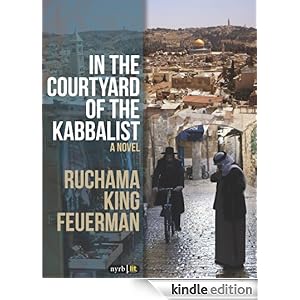
in the courtyard of the kabbalist

Ruchama King Feuerman’s latest, just out

2) Ruchama King Feuerman’s In the Courtyard of the Kabbalist follows an assortment of characters in Jerusalem. I’m very blessed that the author has sent me an advance copy — a review here on the blog will be forthcoming. I was a big fan of her last book, Seven Blessings, as well as some of her more recent, shorter work. Feuerman has been called “a Jewish Jane Austen,” probably because her character portraits so marvelously balance positive and negative qualities. I’m already a few dozen pages in to the new book and really getting into it. For a recent review, see here.

3) Ofir Touche Gafla’s The World of the End will soon be published in English. Continue reading

Background on my new story: “Just Perfect” (or why I believe we all live in a Magical Reality)

This week, Hamodia‘s Inyan Magazine published my new short story (and it’s actually for adults!), entitled “Just Perfect.”

The original version of the story was explicitly a piece of fantasy, but as I mentioned in a previous post, I transformed the story into an example of magical realism rather than fantasy in order to address the concerns of my lovely and knowledgeable editor at Hamodia. 

In the original version, then called “Easy as Pie,” the transformation of Libby’s life occurred after she bumped into a little old lady who offered her a slice of peach pie at a party. The pie made Libby’s life–well, just peachy. But my editor felt the little old lady was a little unbelievable. Could I cut her? The only problem was that her brief appearance at the beginning and the end of the story explained the wacky events in between.

I wracked my brains for a way to ditch the old lady but save the rest of the silliness. There had to be an explanation for it, after all. I did a bit of experimentation and research. Finally, I decided that maybe Libby should just pray–and then G-d answers.

Even after I found my “magically real” solution, I initially balked at making the change. It was an elegant solution, so my reaction puzzled me. I had to think about it a lot, and I think my conclusion is worth sharing. Continue reading

When is an author a Jewish author? Defining Jewish writing, Part 3

Last week was marked by big news in the book world. Famed-American Jewish author (Jewish meaning author’s ethnicity only, in this case–see previous posts on the subject) Philip Roth has declared that he’s retiring from writing. On the other hand, equally aged and famous American-Jewish author Herman Wouk has just put out another novel. Interestingly, these events didn’t just make headlines in Jewish publishing, but publishing as a whole.

The stereotypical Jew is considered “bookish,” pale due to the amount of time he spends indoors. We are called “the People of the Book.” How is it that Jews became inextricably interwoven with books? Continue reading