Helping out the illustrator, even when you don’t know who they are yet

I’ve been working on a new picture book manuscript, my first one in a while. It’s a poem that came out of  experiences with my kids and with others’ and the troubles they face.

I put it away for a couple days, pulling it out again this morning. Now that I’ve decided it’s a picture book, I’m revising it with an eye to the requirements of the format.

O the horror! It’s unillustrateable!

(Yes, I just made that word up.)

What do I mean?  Continue reading

I stepped up to the challenge…but did I succeed?

Well.

A couple months ago, I challenged writers to try something new: a new genre, new POV, new publication, anything that would help us to stretch our wings.

Since I threw down the gauntlet, I had to participate in this challenge, right? So I thought about a couple possible places to sub a feature, a genre I hadn’t published in at least two years. Then I brainstormed a few feature ideas, and I sent our queries based on them.

Guess what.

I got nada.

I know that my ultimate success isn’t in my hands, so I feel like I did my share and can take no responsibility for the rest. And I plan to try for features and other new things, too. In fact, I heard about a poetry contest that sounds so interesting, I’m thinking of attempting serious poetry for the first time in many years.

So, is this a success–because I did try something new–or is this a failure–because I didn’t get responses to my queries?

What do you think? (Please post comments below.)

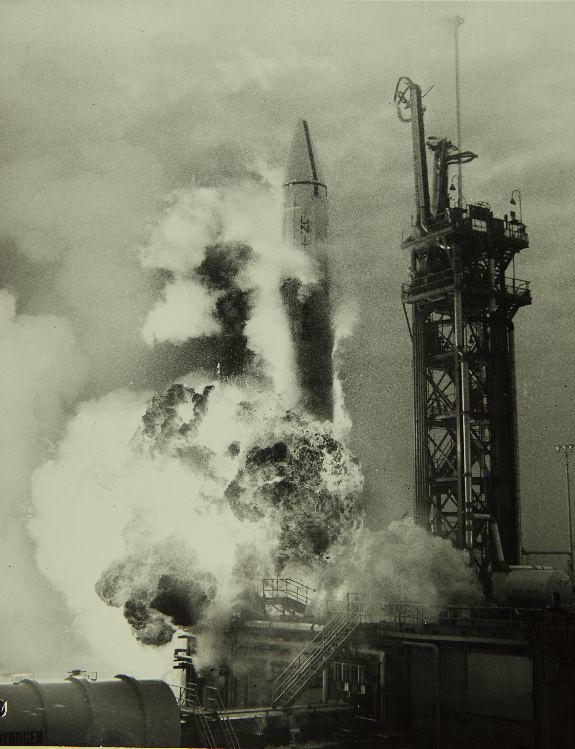
rocket failure

Never made it off the launch pad.
3 Tricks for magazine writers: How to write on a theme and still make your deadline

keyboard

Before you start to type, you might want to try one of these 3 things.

One of my writing jobs is penning teen and tween stories for Jewish magazines. Before getting this gig, I had to learn an important lesson: most kids’ magazines select one theme per issue, and they are only open to stories on those themes. That means you have to write what they want, when they want it–but you’ve got to still tap into your creativity to make your story fresh, fun, and readable.

NOTE: Writing contests (although many are scams, there are plenty of legit ones) and classroom assignments frequently require that submissions/assignments include a specific topic or theme and have a deadline, as well. You don’t have to write for magazines to benefit from these 3 tips.

Sometimes, I get the heads-up on what story the editor wants on what theme a month in advance. But sometimes it’s a lot less. How do I come up with a story on short notice?  Continue reading

Who’s talking? POV, Voice, and Narrator as explained in Anne Lamott’s Bird by Bird

book cover

Bird by Bird by Anne Lamott

There are few books that come up with my writer friends more often than Anne Lamott’s Bird by Bird. In the same way that I feel like I’m not quite smart enough because I’ve never taken Calculus, I’ve felt like a slacker because I never got around to reading it.

And I should have felt guilty–because it’s great.

Okay, so it has a lot of rather vulgar language, but Lamott’s writing is so funny, and yet so useful, that I’m pretty much in love with the book.

One of the interesting bits of advice that Lamott gives writers is a gem she attributes to the author Ethan Canin. The most important way to improve your writing, he says, is to employ a likeable narrator.

Here’s the thing that struck me about this advice: for many, many years, I always wrote in third person. Continue reading

2 Major differences between writing a picture book and writing short stories

So the folktale project turned out to be an eye-opening experience for me.

scissors

Am I a writer, or a barber?

When I first started writing for kids, I didn’t really understand the difference between short stories and picture books. I’d submit short stories to book publishers, and picture books to magazines who published short stories. Selling Raizy and being guided through revisions by Devorah Leah Rosenfeld, the editor at Hachai, schooled me in the differences between the two media. After a couple years, I started writing regularly for children’s magazines, and her lessons allowed me to jump between the two formats.

2 Major differences between picture books and short stories:


1) The length differs significantly in the two formats. Oddly, an entire picture book has about half the words (sometimes less) as a short story for a kids’ magazine.

2) The illustrations in a picture book replace almost all the description. And the only words that could appear in a picture book text are ones that drive the narrative forward. When I learned this lesson, my picture book writing attained a sharpness that it had previously lacked.

Continue reading

When good things happen to anxious people: the beginning of a new project

parakeet, lineated

I hope I say something original, for once.

I’m close to wrapping a piece for a magazine, and I’m waiting on the opinions of some of the beta readers of one of my WIPs, so Friday morning, I started rummaging though my old journals for some new-old project ideas. Among my scribbling, I found notes about a folktale that really appealed to me. A little research has indicated that there is only one picture book retelling of this story. Which is why, for the first time, I’m attempting a folktale retelling.

Good for me, right? It’s good to try something new, right? Continue reading