Personal Geographic

Some of my readers know already that I’m a big fan of National Geographic. For someone who studied anthropology for years, it’s pretty much like periodical crack. (Yes, periodical crack can be read both ways.) I dig the magazine so much, that I spend an hour or two every month reading it cover-to-cover in order to scribble over any non-G rated language so that my children can read the magazine and become educated world citizens without losing their innocence. To some people, that last sentence probably seemed like a paradox, but if you’re an Orthodox Jewish mother with a graduate degree in anthropology and children, it’ll make perfect sense.

Garrison Keillor’s Personal Geographic

MagazineThe February issue has a delightful article by Gerrison Keillor, all about his personal geography. He meanders his way through time and space, describing the landscape of “his” Minnesota: here’s where he went on a field trip, there he had his first job, his cousin died on that spot.

Your Personal Geographic

I thought this was a marvelous exercise for a writer: take a map, add the landmarks of your personal geography to it, then write. Or, better yet, map the setting of your story. Add the landmarks of your characters’ lives. Where did they meet? Where did they lose something? Where did they find something? Now, write.

I’d love to hear your thoughts. Please share them in the comments below.

Ready for me to reveal more embarrassing truths?

I’m making appearance on Tablet again this week. Not being a shirker, I’ve revealed yet another embarrassing detail of my personal life: I am a reverse snob. (This is along with watching Afterschool Specialsbeing somewhat vain, making choices I can never really take back, and believing in ghosts...I know, I’m a bit of a head case.)

At the time a friend first accused me of being a reverse snob, I had no idea that such a label existed. It turns out that not only does it exist (there are definitions for it both on Dictionary.com and in the Urban Dictionary) but I indeed was one. At first I was proud of being  a reverse snob…until I did some soul-searching.

The good news is that I’m now in recovery.

Has anyone ever accused you of something that initially you were proud of, but later reconsidered? Please share your story in the comments below! And don’t forget to check out my essay on Tablet.

Two places to find me in time for Tu B’Shevat!

Hey, everyone.

wild apple photo from wikipedia

Don’t forget to eat fruits from trees on Wednesday night/Thursday in honor of Tu B’Shevat!

It’s my not-so-little secret that I’m kinda obsessed with Tu B’Shevat, the minor Jewish holiday known as the “Rosh Hashana of the trees” in the Talmud and colloquially as “The Birthday of the Trees.” With that in mind, it should come as no surprise you can find me in print twice the week of this holiday.

Where to find me this week:

The first place you can find something written by yours truly is in Binah Magazine. You’ll find my personal essay near the back, where I’ll contemplate the philosophic implications of gardening.

The second place you’ll find me is in Hamodia‘s Binyan Youth Magazine. One of the stories I’ve written that I’ve received the most positive feedback was one written nearly a year ago (just a week or so before Purim 5773) about a boy with Asperger’s mainstreamed in a “typical” yeshiva high school. I’ve brought the back the character a few times and you’ll meet him up again in this week’s story. I took the theme of trees and fruit in a more metaphorical sense here.

What does the theme “Fruit of the Tree” bring to your mind? Songs, books, poems, experiences? Please share below!

Can teenagers really save the world? Musings on middle grade and YA lit

I’m completely behind both writing and housework this week due to a bout of strep throat (thankfully, on the mend now due to penicillin).  This was the second time I’ve been laid up for several days since Sukkos, so it was pretty much a drag, and I really need to try to wrap up at least one story this week. However, I just feel the need to share this with my readers.

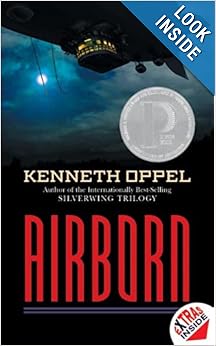
airborn by oppel

Can three teens really save their airship from pirates? Not sure I buy it.

While lying in bed trying very hard not to swallow (it just hurt too much), I read a slew of middle grade and YA novels. Now, I know that tween and teen novels tend to share certain characteristics, and that many of these meet the psychological needs of tweens and teens. But as a once-but-no-longer teen, a particular trait rubbed me the wrong way. Continue reading

In the Courtyard of the Novelist: An interview with Ruchama King Feuerman

I’ve got a treat here today: an interview (conducted via email) with award-winning author, Ruchama King Feuerman. Her latest book, In the Courtyard of the Kabbalist, just came out in September as an ebook. Recently, she signed a contract to expand the release to paperback. I became acquainted with Ruchama through Tablet Magazine online, where both of us have published essays. She was gracious enough to send me a copy of her new book and even more gracious to answer a few questions the novel left me with.

R.K. – In your first book, Seven Blessings, the central figure is a very strong female character. In this new book, you primarily follow two male, unmarried characters. What was that like for you as a married woman?

new book from Ruchama King Feuerman

In the Courtyard of the Kabbalist, now out from NYRB LIT

R.K.F.I prefer writing from the male point of view. This way I don’t worry about slippage, about parts of  my personality leaking into my characters, it’s just cleaner — what’s me is me, and what’s them is them.  I feel much freer to invent and have fun when I write as a man.  I do tend to prefer singles maybe because they are inherently dramatic. Continue reading

Creating convincing inner conflict in characters

Literary inspiration comes from some weird places.

Case in point: What I learned about writing from mussar

On Shabbat, I mostly stick to reading materials with Jewish content. This is just one of the ways I make it distinct from the other days of the week. Over the last several months, I’ve been nickel and diming it through Strive for Truth, Rabbi Aryeh Carmell’s English translation of the Michtav Me’Eliyahu by Rabbi Eliyahu Dessler. This book is considered a classic of mussar, the refinement of character through the lens of Torah.

When I say “nickel and diming it,” I mean this: read a couple pages, realize I didn’t really get it, re-read. Take a nap, shmooze with my husband, or hang out with the kids; pick up the book again. Realize I don’t remember how we got to this part of the essay, then backtrack and again re-read the last couple paragraphs before hitting some new material and starting all over again.

Kinda like reading Durkheim. Really heavy stuff.

Anyway, this week, when I picked up Strive for Truth after Shabbat dinner, I was forced to re-read the first half of the essay I’d begun last week. The essay is about free will. Continue reading