Take 2 Books and Call Me in the Morning: British docs prescribe books for patients

Therapeutic reading?

pill tablet prescription

Imagine popping a couple chapters of a book instead of two of these.

Newspapers are reporting that doctors in the United Kingdom will be prescribing self-help and health books as reading material for those suffering from a variety of mild-to-moderate mental ailments, such as mild depression, anxiety and panic attacks. The CEO of the British charity the Reading Agency, Miranda McKearney, explained in an article in The Guardian, “There is a growing evidence base that shows that self-help reading can help people with certain mental health conditions to get better.”

Wales has already started the recommended reading program, with England scheduled to start in a few months. Continue reading

Writers don’t live on desert islands

A couple weeks ago, a writer I’m friendly with asked in passing if I’d finished revising my novel. I told her that I felt like the rewrite wouldn’t happen until I moved to a desert island. Until that point, there would be distractions: carpool, laundry, cooking, deadlines on other writing projects…and more carpool.

Moving to the desert island is no escape

It kinda got me down.

My writer friend suggested that I apply for a writing retreat. Not quite a desert island, but close enough. Continue reading

New Jewish year, new books by Jewish authors!

The new Jewish year is marked this time around with several new book releases that have me very excited:

1) After being mesmerized by The World to Come and In the Image, I can’t wait to read Dara Horn’s newest, A Guide for the Perplexed, which was officially published today. An essay by the author appeared in The New York Times this week, reminding of the book’s release. The topic was the role of memory in literature — particularly in Jewish literature — which Horn tied to Rosh Hashanah. (The holiday falls later this week, and it’s also known as “The Day of Remembrance.”) Her new novel reportedly draws on this theme as it follows two contemporary characters obsessed with the work of the Rambam.

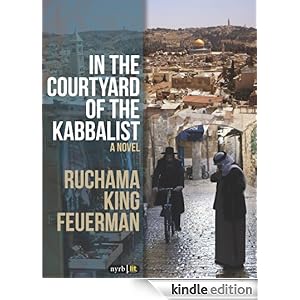
in the courtyard of the kabbalist

Ruchama King Feuerman’s latest, just out

2) Ruchama King Feuerman’s In the Courtyard of the Kabbalist follows an assortment of characters in Jerusalem. I’m very blessed that the author has sent me an advance copy — a review here on the blog will be forthcoming. I was a big fan of her last book, Seven Blessings, as well as some of her more recent, shorter work. Feuerman has been called “a Jewish Jane Austen,” probably because her character portraits so marvelously balance positive and negative qualities. I’m already a few dozen pages in to the new book and really getting into it. For a recent review, see here.

3) Ofir Touche Gafla’s The World of the End will soon be published in English. Continue reading

Soul-bearing writing–writing personal essays that are a little too personal for comfort

Tablet published a new piece of mine today, about the untidy family life of a person who is an Orthodox Jew with relatives who are devout Christians. The comments are busy, and no trolls have appeared so far (meaning that anyone who disagrees with me does so with politeness and reflection).

I’ve published the piece because the problem I described in the article is a surprisingly common one  (among the “baalei teshuvos” who come to religiosity as adults) that most people ignore.

It’s sorta mortifying. This is a problem that is very private for me, and–like many who share it–it is a source of pain that I usually sweep under the rug. I’ve had to explain the absence of half of my family to many people over the years, and it’s never comfortable. Now the entire world can read about it (and share! and comment!).

In general, I don’t write about my family unless it is 100% positive. I felt that this needed to be an exception, in order to support people who share this type of situation. I intentionally omitted the name of my father’s family, and I tried to protect their identities. I wanted not to expose them, but the problem. Nonetheless, one of the commenters pointed out that I was still airing my family’s laundry in public.

I’d love it if readers weighed in here (in a comment below) or in the comments section on Tablet.

<a href=”http://www.makealivingwriting.com/?p=2538″><img src=”http://www.makealivingwriting.com/wp-content/uploads/2013/04/MALW_linkparty1.jpg”/></a&gt;

Review of My Very Own Mitzvah Hands–new from Bracha Goetz & just in time for Chanukah!

My Very Own Mitzvah Hands cover

The Latest from Bracha Goetz!

My friends know that I love to support writers and illustrators local to me in L.A., but this time I’m turning to a writer from my hometown (hint, I’m forever an Orioles fan).

Bracha Goetz is a well-known Jewish writer and the creator of the popular “What Do You See” series of boardbooks from Judaica Press. She’s now teamed up with them for a new series, of which the first book just came out.

My Very Own Mitzvah Hands follows two young children as they employ their hands in a variety of activities. This book is similar to the secular Hands Are Not for Hitting, but differs in two significant ways: 1) the emphasis is exclusively on the positive, 2) the actions are directly connected to using our hands to connect to the Almighty through His mitzvos.

Bracha Goetz’s text rhymes nicely, and uses simple, clear language which is appropriate to the youngest readers. Attractively and colorfully illustrated by Malka Wolf, children will find the pictures engaging, and they’ll particularly appreciate the final spread, which recaps all the actions discussed earlier in the book.

I very much liked the underlying message to children–just because your hands are little, doesn’t mean they can’t bring good into our world. This message is empowering, but it isn’t overpowering in its presentation.  My Very Own Mitzvah Hands lends itself also very well to two common parenting experiences:

1) If your child is using their hands for trouble (like creating murals on your wall with permanent marker or smacking the baby), you can use the rhymes in this book to redirect them or to remind them of better things to do with their hands.

2) Sometimes, children complain about being bored. Using this book as a springboard, parents can invite their children to brainstorm things they can do with their hands to alleviate that boredom.

Whether you’re still doing your Chanukah shopping or looking for books at other times of the year, I’d recommend this book. My Very Own Mitzvah Hands refers to several of elements of Jewish practice only engaged in on a daily basis by traditional and religious families, so I would describe the target audience as children 1-5 years from those backgrounds.