Spending the day on your hands and knees

I spent this morning scrubbing the fridge, stove, and oven. I donned rubber gloves, used multiple cleaning substances — which hopefully will not kill all my brain cells — and scraped mystery goop with a toothpick. I sweated. At one point, I prayed the aforementioned stuff would just come off already!

Work that has meaning

But it was okay. Why? Because it was for a purpose. If I know that I want a kosher-for-Passover kitchen, I’ve got to work for it. If I want it finished before the kids start vacation so I can actually enjoy their company, I’ve got to work for it. And when I reach those goals, I will be satisfied and happy.

Writing is like that. Sometimes, you’ve got to work hard. Sometimes, it ain’t pretty: you’ve got to scrape out the goop and use every trick in the book to do so. But when you work hard, and pray for success, you’ll USUALLY end up with something you can enjoy. And you’ll get more pleasure from it as a result of all that effort.

Have you ever enjoyed something more because it only came with effort? Please share in the comments.

Clean your file cabinets for Passover: Yet another piece of wacky advice from yours truly

So, in the Klempner household, preparations for Pesach — Passover — are in full swing. We’re vacuuming and scrubbing the house, the car, and the van like crazy. I’m muttering things like, “Why do I let them eat in carpool?” and “How do you get cookie crumbs in sock drawers?” under my breath.

Photo by Pptudela and available through Wikipedia Commons

One of my favorite parts of Pesach cleaning is finding things you’ve lost: the missing token from a game you’ve been wanting to play on rainy days, spare change, receipts for purchases you’ve been meaning to return, missing socks.

I’m not suggesting you pull out the 409 and start scrubbing down your file cabinets (although, if a toddler has access to its drawers, it might be a good idea). I’m suggesting that you flip through some old stories — ones you discarded incomplete, or complete but not yet ready for prime time viewing — and revisit them.

Continue reading

Writing for Children: not for those who want glory, fame, or big bucks

Last week’s Hamodia/Inyan Magazine had an article by one of my favorite columnists, Rabbi Fishel Schachter entitled “Guided by Tale Winds.” While today Rabbi Schachter is well-known in the Torah world for essays and presentations for adults about the weekly Torah portion, parenting, and other subjects, he first gained popularity as a rebbi and storyteller to students in Jewish day schools.

Rabbi Schachter explains in the article that one of the adults in his audience told him many years ago that he had to choose between teaching grown-ups or kids — and he indicated that the natural choice for a man of Rabbi Schachter’s talent and intelligence was to teach adults.

Turning to his own rebbi for guidance, Rabbi Schachter asked if teaching kids was really beneath him? Were all the silly voices and so on undermining his stature?

Continue reading

When writing shifts from a hobby to a job: my new essay in Tablet

Meow.

Meow.

Last year, I wrote on this blog that I struggled with creating the annual Purim newsletter I co-write with my husband. Well, this year, I wrote an essay about it for Tablet. You can read it here.

And if you don’t live in L.A., but do want to see this year’s edition of the newsletter (and other freebies throughout the year), you can fill out this form.  I’ll put you on the mailing list!

← Back

Thank you for your response. ✨


Megillat Esther through the eyes of a 21st century writer, or It’s okay if G-d saves the day if there’s forshadowing

This year, in preparation for Purim, I’ve been rereading the megillah at a class given by my LOR (local Orthodox rabbi). Of course, it’s not the first time I’ve read The Book of Esther, as it’s called in English. We do that every year on Purim–twice! And it’s also not the first time I’ve learned it with this particular rabbi. But it is the first time I’ve read it with commentary, guided by my rabbi, since I officially became an author (whatever that means). And boy, is there a difference.

The Big Literary No-No All Over the Megillah

book of esther theater poland

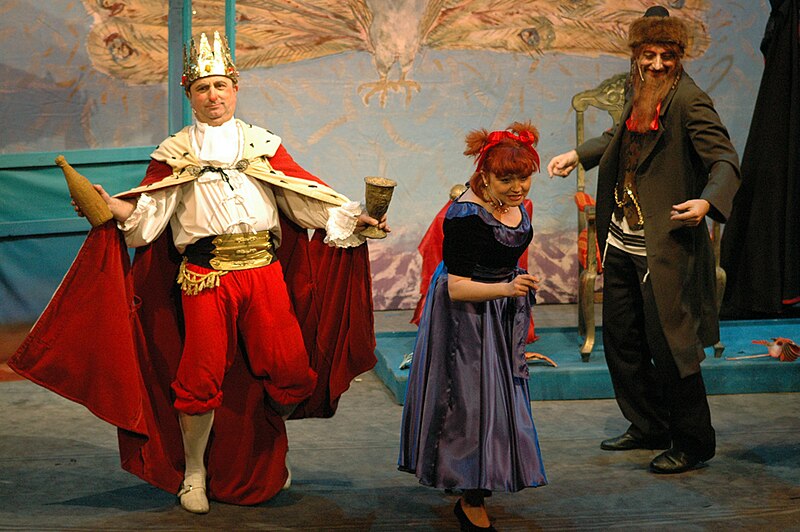
A Purim Spiel in Poland. Photo shared in the Wikipedia Commons by Henryk Kotowski.

When you’re writing fiction, there is a big no-no that you’re told never to do: rely on deus ex machina. In short: don’t get your characters out of a tight corner by dropping a deity down from the sky to perform an instantaneous rescue. The audience will roll their eyes, at best.

The term originated with actors playing deities in the theaters of Greece. But for a religious writer of a different persuasion in the 21st century, it causes problems. Continue reading

How writing a novel differs from writing a screenplay: my last post on STORY

After reading my earlier posts on STORY, you might think I’m 100% sold on the book. I have to admit that I’m a fan, but I do have some quibbles, largely on the adoption of screenwriting techniques for short story or novel writing.

Differences between writing for readers and for viewers that limit the utility of STORY:

1) (The only one I noticed pointed out by McKee) You may get inside the characters heads and explore their thoughts in literature. This creates a greater intimacy between the narrator and the reader. It also means the conflict can be much more subtle and much more interior.

2) Some readers like descriptive, sensory details that can’t be experienced with film — smell and touch can be better evoked, for example (unless you’re viewing in smell-o-rama).

3) The audience must work harder when reading print–in a good way.

4) When contrasted with other useful literary guides, you see some shortfalls. Continue reading