“A funny thing happened on the way to staycation…” or “Happily Ever After as a breeding ground for faith”

So, just as I gave up on blogging about books during summer break, my husband mentioned something tonight so post-worthy, that I just had to share.

Mr. K. has been reading Searching for Dragons to my children at bedtime for the last week or so. Tonight, he noticed a pattern in our youngest, just six years old: at peak points of suspense, when the story gets really “scary” for her, she starts to panic. Usually, he reassures her that there will be a happy ending. Continue reading

Orthodox Women Talk: Roundtable about media consumption

OWTHi, everyone! I know I pretty much never post twice in a day, but I’m hosting this month’s Orthodox Women Talk. Our panelists include:

  • Tali Simon
  • Melissa Amster
  • Ruchi Koval
  • Rivki Silver
  • Keshet Starr
  • Estee Lavitt
  • and yours truly.

This month’s question is this:

How much do you engage in popular music, movies and other forms of entertainment? What factors have contributed to that choice?

Wow! We’ve got a lot of variety in responses. Let’s see what our roundtable panelists have to say... Continue reading

Sol Stein sold me on “The Actor’s Studio Method for Developing Drama in Plots”

Some of my regular readers might notice that my usual response to frustration in the midst of a writing project is to start borrowing writing books from the library and systematically going through them (in addition to eating chocolate, cleaning, and spending too much time on Facebook as an avoidance strategy).

stein on writing

A new favorite writing book, chock full of original, well-informed, and practical advice.

I’m two volumes into my current stack of five. The last couple of days, I’ve been reading Stein on Writing, written by novelist, playwright, and editor extraordinaire, Sol Stein. It’s not a new book, but it’s a classic, and I picked it up due to the acclaim.

I’m not done yet, but I’m just loving this book. It’s much more practical than most of the writing books I’ve read, which tend toward the touchy-feely, and after 50 pages of familiar (but articulate) ground (which I probably could use a review of anyway), Stein starts describing all sorts of new strategies for writers to employ.

My favorite one, thus far, is “The Actors Studio Method for Developing Drama in Plots.” Continue reading

A classic or a shonda: Which pieces of literature stand the test of time?

Earlier today, I was listening to an audio recording of some Beatrix Potter stories. My children and I laughed over the surreal adventures of little Lucy in “Mrs. Tiggy-Winkle” and the slapstick of “Two Bad Mice.” The stories are about a hundred years old now, I believe, and they’ve stood the test of time very well.

A failure in my sister’s home.

My kids and I often read classics, and sometimes we recommend titles to friends and family looking for a good read. Not too long ago, I recommended “Little House” books to my sister. Specifically, I suggested she start with Farmer Boy, which my children think is nearly as funny as a Beverly Cleary book. The scene where Almanzo feeds his pig home-made candy is one of the few literary moments that have made my kids laugh as hard as Ramona’s antics.

So, my sister and brother-in-law picked up a copy to read with one of their kids. A few days later, I got a phone call from my sister.

“What were you thinking?” she asked. Continue reading

Megillat Esther through the eyes of a 21st century writer, or It’s okay if G-d saves the day if there’s forshadowing

This year, in preparation for Purim, I’ve been rereading the megillah at a class given by my LOR (local Orthodox rabbi). Of course, it’s not the first time I’ve read The Book of Esther, as it’s called in English. We do that every year on Purim–twice! And it’s also not the first time I’ve learned it with this particular rabbi. But it is the first time I’ve read it with commentary, guided by my rabbi, since I officially became an author (whatever that means). And boy, is there a difference.

The Big Literary No-No All Over the Megillah

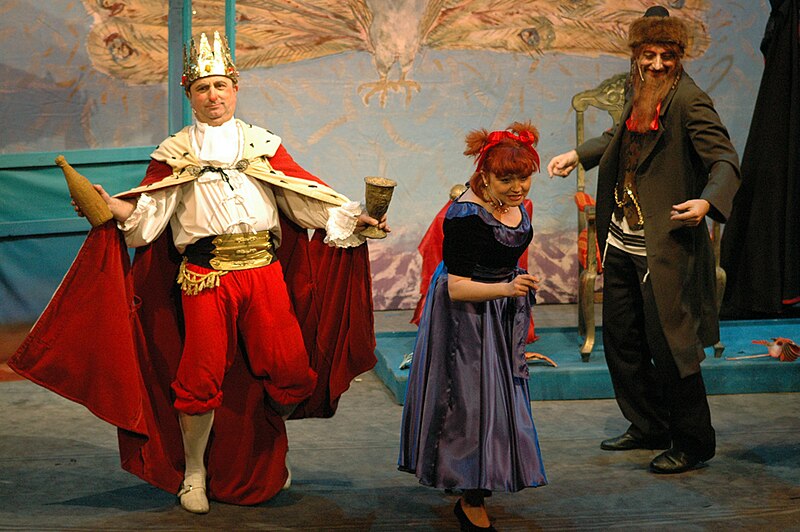
book of esther theater poland

A Purim Spiel in Poland. Photo shared in the Wikipedia Commons by Henryk Kotowski.

When you’re writing fiction, there is a big no-no that you’re told never to do: rely on deus ex machina. In short: don’t get your characters out of a tight corner by dropping a deity down from the sky to perform an instantaneous rescue. The audience will roll their eyes, at best.

The term originated with actors playing deities in the theaters of Greece. But for a religious writer of a different persuasion in the 21st century, it causes problems. Continue reading