How writing a novel differs from writing a screenplay: my last post on STORY

After reading my earlier posts on STORY, you might think I’m 100% sold on the book. I have to admit that I’m a fan, but I do have some quibbles, largely on the adoption of screenwriting techniques for short story or novel writing.

Differences between writing for readers and for viewers that limit the utility of STORY:

1) (The only one I noticed pointed out by McKee) You may get inside the characters heads and explore their thoughts in literature. This creates a greater intimacy between the narrator and the reader. It also means the conflict can be much more subtle and much more interior.

2) Some readers like descriptive, sensory details that can’t be experienced with film — smell and touch can be better evoked, for example (unless you’re viewing in smell-o-rama).

3) The audience must work harder when reading print–in a good way.

4) When contrasted with other useful literary guides, you see some shortfalls. Continue reading

My thoughts on Tablet’s article “Do Jewish Children’s Books Have a Problem with Gender?”

Emily Sigalow, in Tablet this week, published an article entitled “Do Jewish Children’s Books Have a Problem with Gender?”

While she does make one point I agree with, that awards committee’s tend to favor Jewish picture books with male lead characters and that the females tend to be engaged in traditional roles, she seems to learn from that that Jewish children’s books as a whole have a problem.

I have to disagree with the overall picture Sigalow paints, though.

You can see my comments on the article if you visit Tablet (scroll to the bottom of the page), but I’d like to make a few more thoughts.

Jewish children’s books do have problems. Actually, many secular books have the same problems. Continue reading

Conducting interviews to bring realism to your fiction

cuban missile crisis

Radio and television connected Americans with the facts of the ongoing crisis, and also increased their anxiety about its dangers.

You’ll find my story “Duck and Cover” in this week’s Binyan. While I lived through the tail-end of the Cold War, I’m not old enough to have survived the Cuban Missile Crisis, the setting for my story. In order to get details about how teens reacted to the situation, I conducted brief email interviews of a number of subjects who were old enough to remember the events. I asked about their feelings, how they coped with them, how they heard about the crisis, how the adults around them (both parents and teachers) reacted, and so on.

How did I use the interviews?

The responses I received were fascinating, and often contradictory, Continue reading

Can teenagers really save the world? Musings on middle grade and YA lit

I’m completely behind both writing and housework this week due to a bout of strep throat (thankfully, on the mend now due to penicillin).  This was the second time I’ve been laid up for several days since Sukkos, so it was pretty much a drag, and I really need to try to wrap up at least one story this week. However, I just feel the need to share this with my readers.

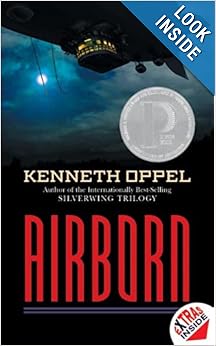
airborn by oppel

Can three teens really save their airship from pirates? Not sure I buy it.

While lying in bed trying very hard not to swallow (it just hurt too much), I read a slew of middle grade and YA novels. Now, I know that tween and teen novels tend to share certain characteristics, and that many of these meet the psychological needs of tweens and teens. But as a once-but-no-longer teen, a particular trait rubbed me the wrong way. Continue reading

What? No love triangle? How books for Jewish teens fit into current YA trends

If you ask observant Jewish teens here in the U.S. whether they overall prefer Jewish books or secular ones, most of them will tell you secular books (trust me, I write for teens, so I’ve asked). Sad, but true.

Why most Orthodox teens prefer secular books

Interestingly, some of these teens will tell you that they wish there were more Jewish books for teens that suited them. Others will tell you they don’t like either Jewish or secular novels — the former don’t engage them, and latter conflict with their religious beliefs.

Thursday, I caught an excellent article on CNN about the history of YA novels in the U.S. You can read it here. There was little that was news to me in the article, but it did make me think about something that’s troubled me for a while — namely why so many Jewish teens are enthralled by secular books that don’t necessarily reflect the values of their families.

Let’s consider why secular YA books are currently selling like hotcakes. Continue reading