Due to the onslaught of housework, etc., that Pesach entails, as well as some nifty work assignments, I’ll be posting less for the next month or so. However, I do want to share with my readers several bits of good news: Continue reading
literature
More about McKee’s STORY: How two of my stories measured up
I’m still reading STORY and have so much to say on its utility that you’ll just have to bear with me for a few more posts on it.
THE GAP

Writer! Mind the gap!
McKee has a theory that the material a story is made of is not words, not paper and pen (or computer) but something he calls the GAP. The Gap develops when a main character acts and discovers that his/her expectations regarding the response s/he’s going to get conflict with the reaction s/he really gets. This discrepancy forces the character to adjust and change.
Can teenagers really save the world? Musings on middle grade and YA lit
I’m completely behind both writing and housework this week due to a bout of strep throat (thankfully, on the mend now due to penicillin). This was the second time I’ve been laid up for several days since Sukkos, so it was pretty much a drag, and I really need to try to wrap up at least one story this week. However, I just feel the need to share this with my readers.
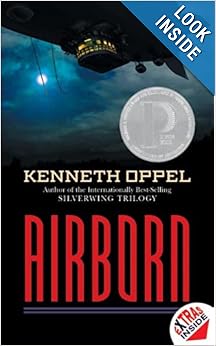
Can three teens really save their airship from pirates? Not sure I buy it.
While lying in bed trying very hard not to swallow (it just hurt too much), I read a slew of middle grade and YA novels. Now, I know that tween and teen novels tend to share certain characteristics, and that many of these meet the psychological needs of tweens and teens. But as a once-but-no-longer teen, a particular trait rubbed me the wrong way. Continue reading
Is poetry as we know it dead? Goldsmith speculates the “meme machine” has taken over.
This week, The New Yorker book blog published a post by Kenneth Goldsmith about the proliferation of rather un-poetic “poetry” spreading across the internet. He writes:
[T]he Canadian media scholar Darren Wershler…has been making some unexpected connections between meme culture and contemporary poetry. “These artifacts,” Wershler claims, “aren’t conceived of as poems; they aren’t produced by people who identify as poets; they circulate promiscuously, sometimes under anonymous conditions; and they aren’t encountered by interpretive communities that identify them as literary.”
…It’s not uncommon to see blogs that recount someone’s every sneeze since 2007, or of a man who shoots exactly one second of video every day and strings the clips together in time-lapsed mashups. Continue reading
What? No love triangle? How books for Jewish teens fit into current YA trends
If you ask observant Jewish teens here in the U.S. whether they overall prefer Jewish books or secular ones, most of them will tell you secular books (trust me, I write for teens, so I’ve asked). Sad, but true.
Why most Orthodox teens prefer secular books
Interestingly, some of these teens will tell you that they wish there were more Jewish books for teens that suited them. Others will tell you they don’t like either Jewish or secular novels — the former don’t engage them, and latter conflict with their religious beliefs.
Thursday, I caught an excellent article on CNN about the history of YA novels in the U.S. You can read it here. There was little that was news to me in the article, but it did make me think about something that’s troubled me for a while — namely why so many Jewish teens are enthralled by secular books that don’t necessarily reflect the values of their families.
Let’s consider why secular YA books are currently selling like hotcakes. Continue reading
Prejudices, or how we pick what we want to read now, next or never
My sister attended Conservative rabbinical school here in L.A. back when I was a California greenhorn, still getting confused because the ocean was to the west instead of east, that people called flip-flops slippers and jimmies, sprinkles. At the time, I was exploring Orthodoxy, but shared many of my sister’s friends from the UJ (now American Jewish University) and her Conservative synagogue. Despite my move to Orthodoxy, I remain friendly with many of her friends and colleagues.
Recently, one of my sister’s classmates came out with a book. Naturally, I was excited, so I checked read the synopsis on Amazon.
 Rebecca Klempner