Interview with Suri Rosen, author of Playing with Matches

Today, I have the pleasure of sharing with my readers an interview with Suri Rosen, the author of a new YA novel, Playing with Matches. (You can find my review of the highly-entertaining Playing with Matches here.)
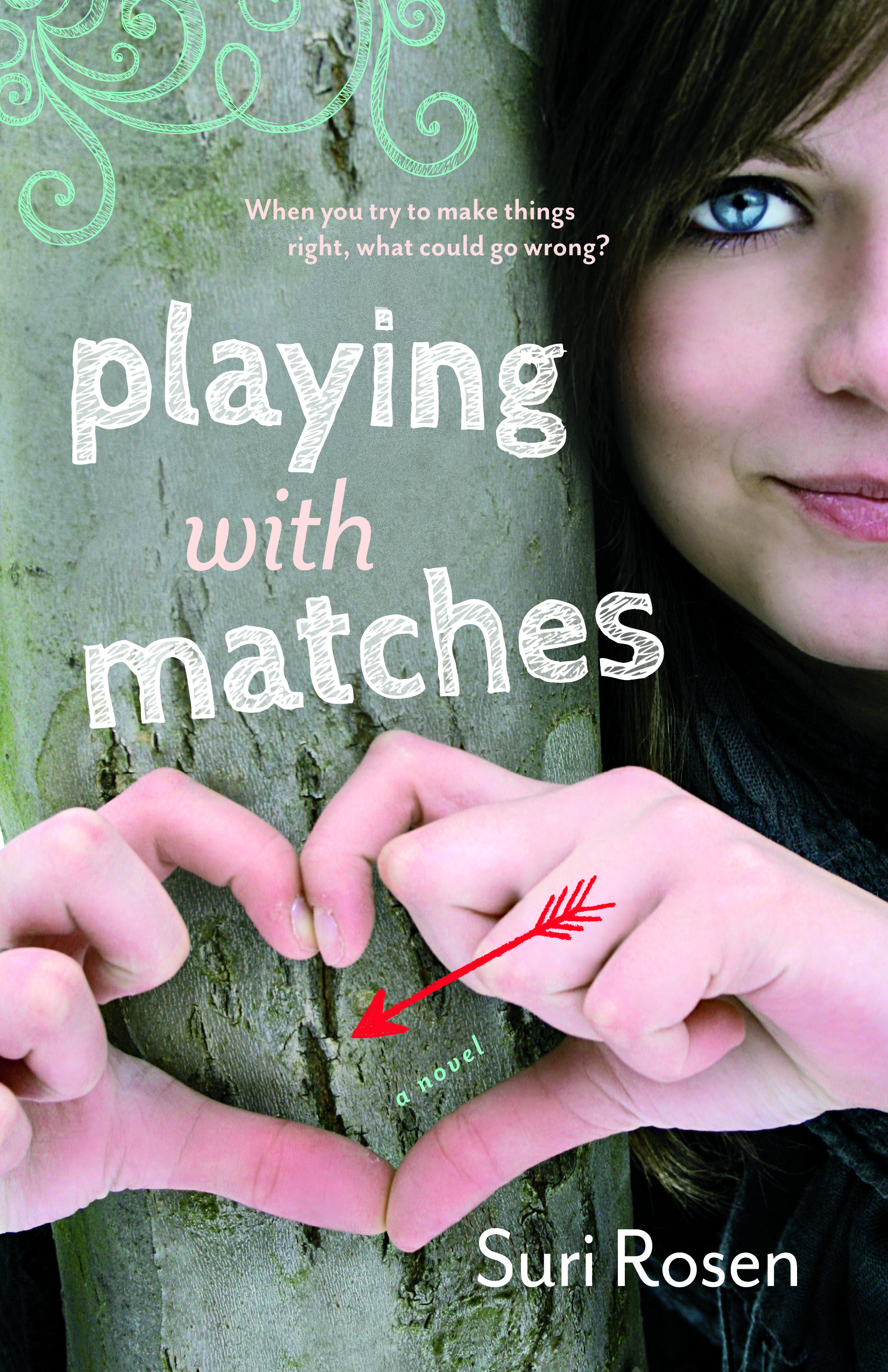
PlayingWithMatches_hiRes (3)Suri piqued my interest in part because she has published her first book — a book with universal themes but with distinctively Orthodox characters and setting — with a mainstream, secular publisher. Most books with Orthodox themes tend to be published by Jewish publishers. I conducted this interview last week via email.

RK: This is your first novel, but as many of the reviewers have noted, you write with real skill. In particular, you handle Rain’s voice with humor and confidence.​ Have you published other genres before, taken classes, or to what else do you attribute your success?

SR: I’ve always been writing. (I cover this in detail on this website,’Dear Teen Me.’)

I read numerous books and blogs about writing and spent countless hours discussing technique with other novelists. But the most important aspect of becoming a publishable author  – to me – is getting feedback. Giving a critique also sharpens your craft but getting a critique to me is the single most important factor in developing yourself as a writer.

And it can be brutal! Continue reading
Writing a serial: Nickel and dime-ing your way through fiction publishing

On the way to pick up one of my kids at school on Friday afternoon, one of the other moms pulled me aside.

“We’re really enjoying your new serial in Binah,” she said.

I got a little extra bounce in my step. “Thanks!”

“But getting just one chapter a week is driving us crazy! It’s so hard to wait for the next one!’ she added.

“Sorry!” I replied.

There really isn’t anything I can do to help her, but I feel her pain. Usually, I’m the reader throwing my arms up in frustration at the end of a serial episode screaming, “I have to know what happens next! Argh!”

What’s really funny, is that now as a writer, Continue reading

Announcing a class for beginning Jewish writers in L.A.

Do you have a picture book idea?

Have you always wanted to write for the Jewish magazines, but didn’t know how?

I will, G-d willing, be teaching a workshop on writing for Jewish tots, tweens, and teens later this month.

A possible student for my workshop?

Audience: Ladies ages 15 and up are welcome to participate.

Date:May 25th

Time:10 am – 1 pm

Location:Private home in L.A.

Cost:$25, $18 if you refer a friend and they also commit

To sign up: Please fill out the form below.

← Back

Thank you for your response. ✨

Ruchama King Feuerman’s latest, now in paperback!

For those of you who haven’t yet read Ruchama King Feuerman’s latest novel (maybe because you were frustrated about its original ebook-only release), In the Courtyard of the Kabbalist is now available in paperback.

Haven’t yet added it to your To-Read list, on Goodreads or otherwise? You can learn more about the book through my interview with her or by reading this great review of the book by Risa Miller (a talented Jewish novelist herself).

I think it’s fascinating that the book’s ebook success with readers and critics propelled it to more traditional publication. It will be even more interesting to see how the book sells now that it is more accessible to readers.

Megillat Esther through the eyes of a 21st century writer, or It’s okay if G-d saves the day if there’s forshadowing

This year, in preparation for Purim, I’ve been rereading the megillah at a class given by my LOR (local Orthodox rabbi). Of course, it’s not the first time I’ve read The Book of Esther, as it’s called in English. We do that every year on Purim–twice! And it’s also not the first time I’ve learned it with this particular rabbi. But it is the first time I’ve read it with commentary, guided by my rabbi, since I officially became an author (whatever that means). And boy, is there a difference.

The Big Literary No-No All Over the Megillah

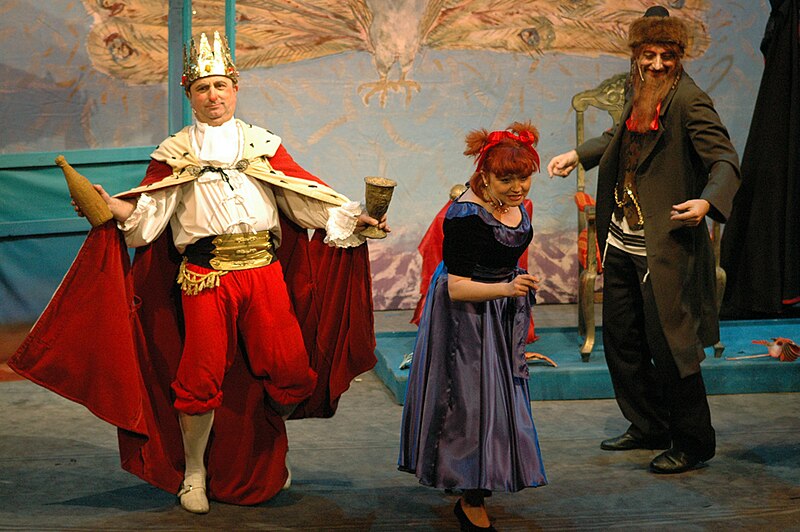
book of esther theater poland

A Purim Spiel in Poland. Photo shared in the Wikipedia Commons by Henryk Kotowski.

When you’re writing fiction, there is a big no-no that you’re told never to do: rely on deus ex machina. In short: don’t get your characters out of a tight corner by dropping a deity down from the sky to perform an instantaneous rescue. The audience will roll their eyes, at best.

The term originated with actors playing deities in the theaters of Greece. But for a religious writer of a different persuasion in the 21st century, it causes problems. Continue reading

How writing a novel differs from writing a screenplay: my last post on STORY

After reading my earlier posts on STORY, you might think I’m 100% sold on the book. I have to admit that I’m a fan, but I do have some quibbles, largely on the adoption of screenwriting techniques for short story or novel writing.

Differences between writing for readers and for viewers that limit the utility of STORY:

1) (The only one I noticed pointed out by McKee) You may get inside the characters heads and explore their thoughts in literature. This creates a greater intimacy between the narrator and the reader. It also means the conflict can be much more subtle and much more interior.

2) Some readers like descriptive, sensory details that can’t be experienced with film — smell and touch can be better evoked, for example (unless you’re viewing in smell-o-rama).

3) The audience must work harder when reading print–in a good way.

4) When contrasted with other useful literary guides, you see some shortfalls. Continue reading